

Somebody like me: Understanding COVID-19 Vaccine Hesitancy among Staff in Skilled Nursing Facilities
March 12, 2021
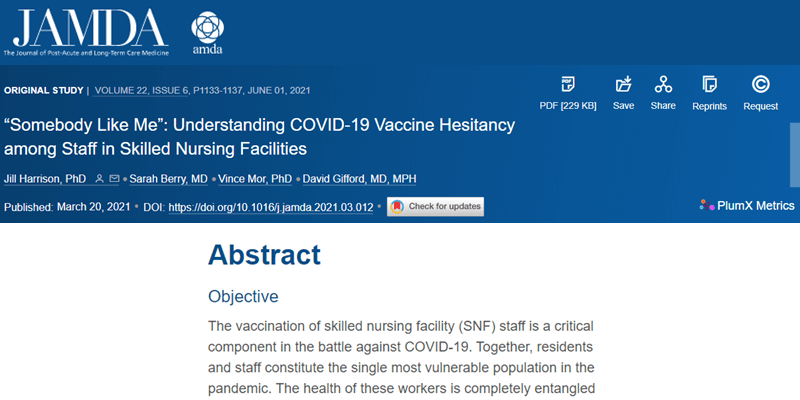
IMPACT members Jill Harrison, PhD, Executive Director, Vincent Mor, PhD, Multiple Principal Investigator, and David Gifford, MD, MPH, Executive Committee, Health Care Systems Core, are among authors of an article investigating vaccine hesitancy in skilled nursing facilities staff and possible strategies to reduce hesitancy.
Abstract
Objective
The vaccination of skilled nursing facility (SNF) staff is a critical component in the battle against COVID-19. Together, residents and staff constitute the single most vulnerable population in the pandemic. The health of these workers is completely entangled with the health of those they care for. Vaccination of SNF staff is key to increasing uptake of the vaccine, reducing health disparities, and reopening SNFs to visitors. Yet, as the vaccine rollout begins, some SNF staff are declining to be vaccinated. The purpose of this article is to describe reasons for COVID-19 vaccine hesitancy reported by staff of skilled nursing facilities and understand factors that could potentially reduce hesitancy.
Design
Five virtual focus groups were conducted with staff of SNFs as part of a larger project to improve vaccine uptake.
Setting and Participants
Focus groups with 58 staff members were conducted virtually using Zoom.
Measures
Focus groups sought to elicit concerns, perspectives, and experiences related to COVID-19 testing and vaccination.
Results
Our findings indicate that some SNF staff are hesitant to receive the COVID-19 vaccine. Reasons for this hesitancy include beliefs that the vaccine has been developed too fast and without sufficient testing; personal fears about pre-existing medical conditions, and more general distrust of the government.
Conclusions and Implications
SNF staff indicate that seeing people like themselves receive the vaccination is more important than seeing public figures. We discuss the vaccination effort as a social enterprise and the need to develop long-term care provider-academic-community partnerships in response to COVID-19 and in expectation of future pandemics.