

October 1, 2023
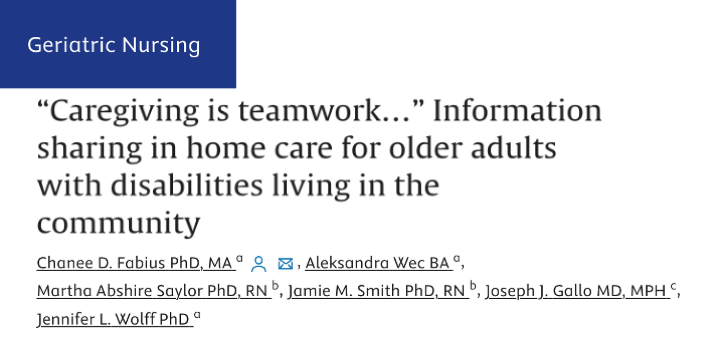
IMPACT Career Development Awardee and Faculty Scholar Chanee Fabius, PhD, is among authors that published an article exploring the challenges of information sharing in community-based long-term services and supports (LTSS) for older adults with disabilities, focusing on the crucial role of direct care workers.
Despite their intimate knowledge of clients’ daily lives, preferences, and health changes, direct care workers are often excluded from clinical care team interactions, leading to disorganized information sharing. The study highlights the particular concerns surrounding dementia care, as direct care workers navigate complex family dynamics and dementia-related behaviors. They often assist older adults during medical appointments and interact with patient portals, yet there is limited guidance on leveraging their expertise for improved information sharing. The article discusses findings from home care worker interviews and information sharing methods.
Abstract
Aim
The authors examined information sharing between direct care workers, family caregivers, and clinicians involved in the care of older adults with disabilities.
Methods
Semi-structured interviews with N = 11 representatives of home care agencies (“residential service agencies” in Maryland).
Results
Work system and process characteristics relevant to information sharing included: (1) using electronic management systems and patient portals to communicate within agencies and with clinicians, (2) implementing tools to gather information about client goals, preferences, and routines, and (3) relying on family members for information about clients’ needs. Participants did not report differences in dementia-related care coordination; however, dementia-related adaptations involved additional considerations for navigating relationships with family and standardizing processes to communicate with clinicians.
Conclusion
Findings highlight care demands experienced by direct care workers and support calls to better coordinate information sharing between interdisciplinary care teams.