

Wake Forest School of Medicine
Using Telemedicine to Improve Engagement in Advance Care Planning in Patients with Cognitive Impairment or Unrecognized Dementia
Health Care Systems
Wake Forest Baptist Health
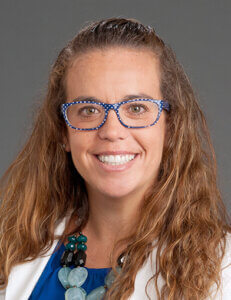
Dr. Gabbard is an assistant professor in the Department of Internal Medicine. She is triple boarded in Internal Medicine, Geriatrics, and Hospice and Palliative Medicine. She trained at the University of Arizona and then completed a clinician-educator fellowship at Johns Hopkins University. Her clinical interests include integration of early palliative care in patients with serious illnesses, clinical care of comorbid chronically ill and frail older adults, and promotion of healthy aging. These interests translate into both educational and research settings. Dr. Gabbard serves as the Palliative Care Research Director and Associate Program Director of the Hospice and Palliative Medicine Fellowship Program at Wake Forest School of Medicine. She is a physician-scholar and educator seeking to develop her strong interests in implementation science, clinical informatics, and pragmatic clinical trial design.
RATIONALE: There is a growing need to provide high quality of care for people living with cognitive impairment or dementia that aligns with their overall goals, values, and health care preferences. Advance Care Planning (ACP) can help improve patient-centered care, however it is vastly underutilized as part of primary care. Telemedicine may provide a means to improve the outreach of ACP as part of outpatient primary care.
OBJECTIVE: The purpose of this pilot project is to test and evaluate the reach and adoption of a pragmatic telemedicine ACP intervention.
SETTING: Primary care practices in the Wake Forest Baptist Health Network’s affiliated Accountable Care Organization in North Carolina.
POPULATION: Community-dwelling patients, ≥65 years, with a diagnosis of mild cognitive impairment or unrecognized dementia, determined by the EHR Risk of Alzheimer's and Dementia Assessment Rule prediction model.
DESIGN: The intervention will be embedded into the clinical workflow and will consist of primary care providers participating in telemedicine dyad video visits with patients and their caregivers to discuss ACP.
OUTCOMES: This pilot study will assess the reach and adoption of the telemedicine ACP intervention among patients with mild cognitive impairment or unrecognized dementia. Secondary outcomes will assess quality of ACP documentation within the electronic health record and usage of ACP billing codes.
IMPACT: This pilot study will inform and strengthen the design of a large-scale, multicenter embedded pragmatic trial. Telemedicine has the potential to overcome ACP barriers related to timing and travel restraints. It also provides patients and their caregivers with an opportunity to discuss their goals, values and priorities for healthcare within their home setting, thereby prioritizing “aging in place”. Engaging patients in ACP and obtaining appropriate reimbursement allows primary care providers to sustainably deliver high-quality, patient-centered care.