

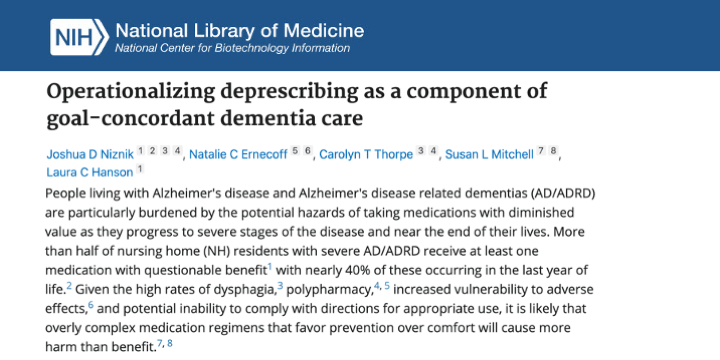
Operationalizing deprescribing as a component of goal-concordant dementia care
December 22, 2022
IMPACT member Joshua Niznik, PharmD, co-authors an article discussing the deprescribing of medications for people living with dementia in severe stages and at end of life. The authors examine the role of patient goals and the risks and benefits of medications for medically complex adults.
Abstract
People living with Alzheimer’s disease and Alzheimer’s disease related dementias (AD/ADRD) are particularly burdened by the potential hazards of taking medications with diminished value as they progress to severe stages of the disease and near the end of their lives. More than half of nursing home (NH) residents with severe AD/ADRD receive at least one medication with questionable benefit1 with nearly 40% of these occurring in the last year of life.2 Given the high rates of dysphagia,3 polypharmacy,4, 5 increased vulnerability to adverse effects,6 and potential inability to comply with directions for appropriate use, it is likely that overly complex medication regimens that favor prevention over comfort will cause more harm than benefit.7, 8
Read the full article.