

July 10, 2024
Authors: Joshua Niznik, PharmD, PhD, Antonia Bennett, PhD, Natalie C. Ernecoff, PhD, MPH, Sheryl Zimmerman, PhD, Kathryn Wessell, MPH, Laura Hanson, MD, Gary Epstein-Lubow, MD, MPH, Carolyn Malone, MPH, Willetha Barnette, Bart Brammer, Katie Brandt, Roberta Cruz, Monica Downer, Darrell Foss, LuPita Gutierrez-Parker, Freddye G. James, Judith S. Rocha, Anthony Wagner
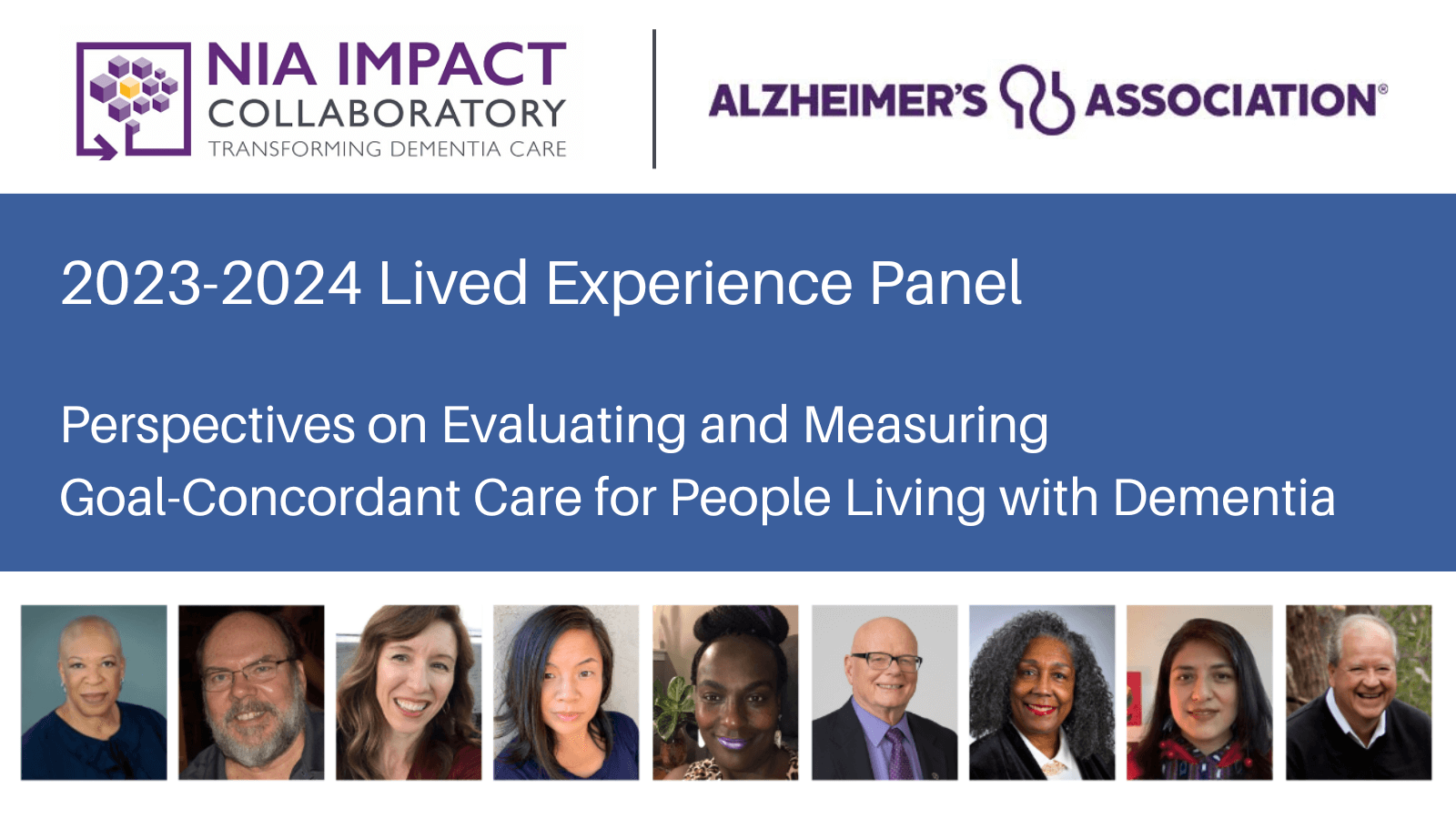
Description: This report describes the major lessons learned from a series of discussions between people living with dementia, care partners, researchers, healthcare providers, and other community members about ways to improve the quality of healthcare for people living with dementia. The main topic of these discussions was ‘goal-concordant care’ which means ensuring that healthcare treatments and decisions are in line with what matters most to patients and families. Panel members were asked to discuss their experiences talking about goals with their healthcare providers and how thinking about their goals could help with making healthcare decisions. Some key takeaway points are:
- Decision-making for people living with dementia is more often driven by needs and priorities, than by healthcare “goals.”
- Decision-making for people living with dementia involves many people, which is not often reflected in research.
- It can be difficult for people living with dementia and care partners to feel actively involved in healthcare decision-making.
Further study is needed to identify strategies to ensure that people living with dementia and care partners are actively involved in decision-making and in identifying the best ways to measure whether the needs and priorities of people living with dementia and care partners are being met.
Read the full report here.