

COVID-19 Serology Strategies in Skilled Nursing Facilities (CERO)

Principal Investigator
NYU Langone Health


This is a unique opportunity to collaboratively engage with skilled nursing facility leadership, staff, residents, and families to immediately address this devastating pandemic in preventing new infections and in using these strategies for other infectious challenges that may come in the future.


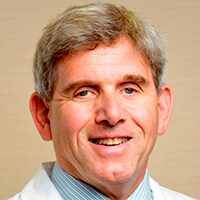
Joshua Chodosh, MD, MSHS, holds the inaugural endowed Michael L. Freedman professor of Geriatric Research in the Division of Geriatric Medicine and Palliative Care in the Department of Medicine at NYU School of Medicine. He is a clinical geriatrician, seeing patients in the VA NY Harbor Healthcare System and is founding Director of the Freedman Center on Aging, Technology, and Cognitive Health (CATCH) and co-Director of the NYU Aging Incubator. Dr. Chodosh conducts multiple AD/ADRD NIH and VA pragmatic clinical trials and leads the Outreach and Recruitment Core of the NYU Alzheimer’s Disease Center. He has held a number of leadership roles focused on healthcare policy impacting the quality of care for patients with chronic disease, particularly those living with dementia. Dr. Chodosh served as chair of the State of California Alzheimer’s and Related Dementias Advisory Committee and co-chaired a statewide effort leading to the California State Plan for Alzheimer’s disease.


RATIONALE: The COVID-19 pandemic has been particularly devastating for those with multimorbidity including Alzheimer’s disease (AD) and AD related dementia (AD/ADRD) and who are living in congregant environments such as skilled nursing facilities (SNF). ADRD SNF residents are at greatest risk of being unable to comply with prevention behaviors and subsequently impact the entire facility and staff. Not surprisingly, long-term care facility deaths have been among the largest proportion of state reported deaths. Asymptomatic spread may also be higher in these settings, further challenging our ability to achieve isolation practices without complete isolation of all residents – resulting in harmful social isolation, especially for those with ADRD.

OBJECTIVE: Design and pilot test an intervention that leverages the COVID-antibody and PCR status of residents and staff to inform staff-residents care assignments that will minimize COVID-19 transmission rates.

SETTING: Two New York City nursing facilities with high minority and ADRD representation.

POPULATION: People with ADRD and those who are living in congregant environments such as SNF.

DESIGN: We will develop facility-specific staff-resident assignment protocols based on COVID-19 serology and PCR testing, which are feasible, scientifically sound, safe, and acceptable to stakeholders: administrators, clinical leaders, front-line staff, residents and families. Methods will include: 1) obtaining stakeholder feedback for testing and cohorting protocol refinement; and 2) implementing SNF-unit staffing assignment strategies based on COVID-19 serology and PCR status to minimize viral transmission.

OUTCOMES: We will measure a) COVID-19 resident and staff incidence; and b) related hospital transfers. We will assess implementation by: 1) % intended pairings achieved; 2) reasons for success/failure; and 3) intervention acceptability using exit interviews with stakeholders.

IMPACT: We anticipate our findings will enable a larger trial to create evidence-based policy for nursing homes’ staff-resident assignments that minimize risk of acquiring COVID-19.

Effect of a COVID-Specific Advance Care Planning Intervention on Documentation of Advance Directives and Goals of Care

Principal Investigator
Ellen McCreedy, PhD, MPH Brown University School of Public Health


“The pandemic is highlighting some of the challenges to documenting and honoring care preferences for assisted living community residents with ADRD.”


Ellen McCreedy, PhD, MPH is interested in improving the quality of life for people living with advanced dementia. Her research goals are to reduce the amount of futile and burdensome care received at the end of life; and to provide comfort, meaning, and moments of joy to people living with dementia and their families. Professor McCreedy received her MPH in Global Health from the University of South Florida, her PhD in Health Services Research from the University of Minnesota, and recently completed a postdoctoral research fellowship at Brown University, Center for Gerontology and Healthcare Research. Dr. McCreedy is directing a pragmatic trial of a personalized music intervention to reduce agitation and isolation in nursing home residents living with dementia.


RATIONALE: Assisted living communities (ALCs) serve over 800,000 vulnerable older adults at high risk of developing complications and dying from COVID-19. Documenting care preferences in the form of an advance directive or medical order reduces receipt of unwanted care during and after the pandemic.

OBJECTIVE: The primary objective of this embedded, pragmatic, cluster-randomized trial (ePCT) is to test the effects of a COVID-specific, advance care planning (ACP) intervention on documentation of care preferences in a target cohort of assisted living community (ALC) residents with Alzheimer’s disease and related dementias (ADRD) from 150 ALCs in 3 states.

SETTING: 150 assisted living communities (ALCs) in Minnesota, Wisconsin, and Florida.

POPULATION: People living with ADRD and their family members.

DESIGN: ALCs will be randomly assigned to one of three groups: 1) Usual care; 2) ACP informational website and video sent electronically to family members; or 3) ACP informational website and video sent electronically to family members plus a follow-up ACP discussion with a Bluestone clinician.

OUTCOMES: The primary clinical outcome will be new documentation of a preference for comfort-focused care in the EHR over four months; secondary clinical outcomes will be new documentation DNR or DNI orders in the EHR over four months and the proportion of enrolled residents with any hospitalizations over four months. Implementation outcomes include counts of physician calls with family members and counts of website and video views.

IMPACT: Little is known about the ACP process for ALC residents with ADRD during COVID-19, and the barriers to honoring care preferences in this setting. This ePCT leverages the EHR of a large ALC physician group to identify eligible residents and family members, deliver the intervention, and assess resident outcomes.

Evaluation of a State-wide Effort to Improve COVID-19 Infection Control in Massachusetts Nursing Homes

Principal Investigator
Lewis Lipsitz, MD Marcus Institute for Aging Research, Hebrew SeniorLife


It is important to evaluate the state-wide effort to reduce COVID-19 infections in MA nursing homes to determine what worked and in whom, so it can serve as a model for other states tackling this disease.


Lewis Lipsitz, MD is the Director of the Hinda and Arthur Marcus Institute for Aging Research at Hebrew SeniorLife, Chief of the Division of Gerontology at Beth Israel Deaconess Medical Center (BIDMC), and Professor of Medicine at HMS. His research is focused on age-related alterations in blood pressure and cerebral blood flow regulation and their relation to falls, syncope, and cognitive dysfunction. Dr. Lipsitz has served as Principal Investigator of an NIA-funded Program Project Grant for 26 years, an Older American Independence Center Grant for 15 years, and a Hartford Foundation Center of Excellence in Geriatric Medicine for 15 years. In these roles he has assembled multidisciplinary teams from multiple academic institutions and laboratories to study the mechanisms and management of several important clinical geriatric syndromes, including falls, syncope, dementia, delirium, and frailty. He is was Principal Investigator of an NIA Merit Award to study the physiologic mechanisms of frailty in old age, which led to his current NIA-funded clinical trial that examines the effect of Tai Chi exercises on physical function and health care costs in frail elderly residents of subsidized senior housing facilities. He is also Principal Investigator of an R01 from the NIA to study cerebrovascular mechanisms of falls. His recent translational research includes demonstrations that Tai Chi exercise can improve physical function and balance control in frail elderly people, vibrating insoles based on the principal of stochastic resonance can improve gait and balance in older people, and the treatment of hypertension with ACE inhibitors can improve cerebral blood flow and executive function.


RATIONALE: In April 2020, Massachusetts’ (MA) nursing homes (NH) became a national hotspot for COVID-19 infections with over 10,000 confirmed cases. More than half of the state’s COVID-19 deaths occurred among residents and staff of these facilities, particularly residents with Alzheimer’s disease and related dementias (ADRD). MA made $130 million of funding available for 2 months to NHs to improve infection control contingent on compliance with a new set of care criteria.

OBJECTIVE: Evaluate strategies to minimize spread of COVID-19 among older adults and their care providers within NHs, including mandatory testing of all residents and staff, a 28-point infection control check-list, and adherence to personal protective equipment (PPE) and resident cohorting requirements.

SETTING: NH facilities across Massachusetts compared to those in Connecticut, Rhode Island, New Hampshire, and Vermont.

POPULATION: All NH residents, including older adults with ADRD and/or Black race who are at greatest risk of morbidity and mortality from COVID-19.

DESIGN: Descriptive study using merged data from 4 MA NH audits (inspections); data sent by all MA NHs to the Massachusetts Center for Health Information Analysis (CHIA) regarding COVID infection rates, mortality, staffing, PPE, and hospitalizations; CHIA data on COVID-19 test results; and MDS data provided by Brown University's Gerontology Center. Compare rates of COVID-19 positive residents between NHs in Mass and other New England state settings stratified by the cumulative prevalence of SARS-CoV-2 in the area in which each facility is located, and by the facility distributions of ADRD diagnoses or Black race.

OUTCOMES: Primary outcomes will include changes in the weekly rates of new COVID-19 cases among facility residents and staff, and resident mortality rates associated with the infection over the 2-month intervention period.

IMPACT: The information garnered from this robust state-wide effort to manage COVID-19 in MA NHs could serve as a model for other states and health care systems. We will disseminate the MA experience through various modalities and national organizations, and ultimately leverage what is learned to help protect the millions of American nursing home residents, including those most vulnerable with ADRD and Black race.