
IMPACT members to discuss nomenclature in dementia

Penn Memory Center at University of Pennsylvania Health System, is hosting a virtual event with IMPACT’s Jason Karlawish, MD and Angela Taylor, who will discuss the shortcomings and challenges of nomenclature in Alzheimer’s disease and related dementias. Karlawish and Taylor are working to find the answers to questions like:

  • What’s the difference between Alzheimer’s disease and dementia?
  • Should we still use the word dementia?
  • Does it make sense to say that a person with mild cognitive impairment (MCI) can progress to Alzheimer’s disease?
  • In the term “ADRD,” which stands for Alzheimer’s Disease and Related, does the second “D” stand for “disease,” “disorder,” or “dementia”?

The “Words Matter: Nomenclature in Dementia” event will take place January 18, 2023 at 12 pm ET.

Registration closed.
IMPACT members evaluate the effects of the Tailored Activity Program on dementia-related behaviors in different racial groups

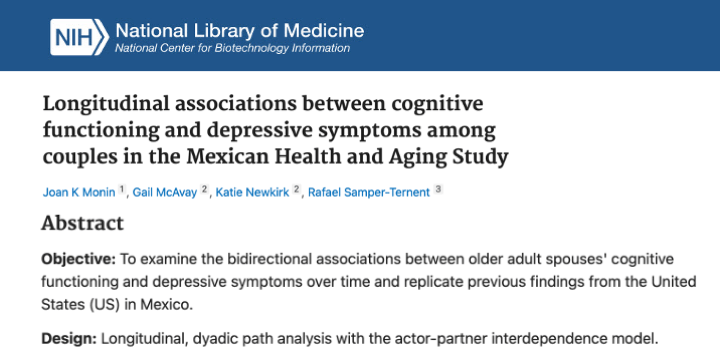
Although nonpharmacological approaches are considered first-line treatments for dementia-related behaviors, it is unclear as to their effectiveness for different racial groups. IMPACT’s Laura Gitlin, PhD, FGSA, FAAN, Nancy Hodgson, PhD, RN, FAAN, Lauren Parker, PhD (2021-2022 IMPACT Faculty Scholar) evaluated the effects of the Tailored Activity Program (TAP) on agitated and aggressive behaviors in Black and White families.

They found that Black families, when compared to White families, derived greater behavioral benefits from TAP for people living with dementia (PLWD) at 3 months despite having less treatment exposure. Additionally, examining differential race effects may enhance precision in using nonpharmacological approaches and promote equity in dementia care for underserved populations.

To read the full article, visit this link.

IMPACT-C publication cited as one of five most interesting articles in health care for 2022

An article published by IMPACT Collaboratory members was included in a list published by Vox of five articles from 2022 that might change how people think about health care.

The journal article, Evaluating the Findings of the IMPACT-C Randomized Clinical Trial to Improve COVID-19 Vaccine Coverage in Skilled Nursing Facilities, was published in JAMA Intern Medicine in January 2022. The article summarized findings of the IMPACT-C trial to improve COVID-19 vaccine coverage in skilled nursing facilities.

The trial utilized a 3-month educational campaign for encouraging vaccination and utilized best practices such as identifying frontline champions and giving small gifts to vaccinated staff. The authors found no significant difference in resident or staff vaccination in facilities that received the vaccine campaign vs usual care.

The study, identified for Vox by David Grabowski at Harvard Medical School, provided insight into more effective policies to increase vaccination rates. The authors suggested future vaccine campaigns should strive to create an organizational culture that addresses concerns of all stakeholders and brings staff and residents together with a common goal of ending the pandemic.

IMPACT Collaboratory funds two career development awards

The IMPACT Collaboratory is pleased to announce two new recipients of the IMPACT Career Development Award Program. Recipients were selected from an impressive group of competitive applications.

2022 Cycle 4 NIA IMPACT Career Development Award Recipients

Andrew Kiselica, PhD, University of Missouri
Technology Assistance in Dementia (Tech- AiD)

Komal Patel Murali, PhD, New York University Rory Meyers College of Nursing
Barriers to Hospice Care Transitions for Diverse Persons Living with Dementia

About the NIA IMPACT Career Development Award Program

NIA IMPACT Collaboratory funds two to four Career Development Awards annually. These awards support the development of early-stage MD, PhD, or equivalent researchers who seek careers conducting ePCTs for people living with AD/ADRD and their care partners. The IMPACT Collaboratory prioritizes applications that address dementia care for people of all backgrounds and promote health equity.

Amy Kelley named deputy director of the National Institute on Aging

Congratulations to Amy Kelley, MD, MSHS, former member of IMPACT’s Patient and Caregiver Relevant Outcomes (PCRO) Core, on her new role as deputy director of the National Institute on Aging (NIA)! In a recent blog post, she shares her priorities for the position and her career arch, including the time she spent partnering with IMPACT.

To read Kelley’s blog post, visit this link.

IMPACT Collaboratory included in NIH 2022 progress report on dementia research

The National Institutes of Health (NIH) recently released their 2022 Scientific Progress Report on Advancing Alzheimer’s Disease and Related Dementias and included the IMPACT Collaboratory as a highlight of real word applications of dementia research.

The NIH is working toward the ambitious goal of preventing and effectively treating Alzheimer’s disease and related dementias by 2025. The progress report features scientific advances and related efforts between April 2021 and early 2022 in areas including drug development, lifestyle interventions, biomarker research, and more. The report provides an overview of the meaningful progress researchers are making to address Alzheimer’s disease, which impacted more than 6 million Americans in 2022, and other dementias.

The IMPACT Collaboratory’s efforts to test interventions in real world settings was commended in the progress report, with special focus on the research conducted during COVID-19 to study the impact of the pandemic on nursing home residents. Members of the IMPACT Collaboratory received five supplement awards for intervention studies and three supplement awards to develop infrastructure systems to monitor the effects of COVID-19 vaccines.

Read the full report at this link.