

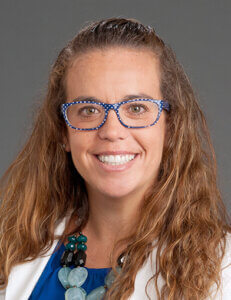
Joan Carpenter, PhD, CRNP

University of Maryland School of Nursing

Implementation of a Telehealth Palliative Care Model for Persons with Dementia

Health Care Systems

University of Maryland School of Nursing

Dr. Carpenter is an assistant professor at the University of Maryland School of Nursing and a health scientist at the Corporal Michael J. Crescenz VA Medical Center. Dr. Carpenter is a geriatric nurse practitioner, an advanced certified hospice and palliative care nurse, and fellow in palliative care nursing. She is an expert in geriatric palliative care, specializing in post-acute and long-term care settings. Her research interests focus on the implementation and evaluation of non-pharmacologic palliative care interventions to improve quality of life, reduce symptom burden, and enhance decision making for people with serious illness and their care partners in post-acute and long-term care. She has extensive experience collaborating with interdisciplinary health professionals in community skilled nursing facilities and Veterans Affairs community living centers to implement evidence-based practices and complex interventions to support high-quality palliative care.  Her position as an educator, researcher, and leader supports national efforts to enhance serious illness care for older adults.

RATIONALE: People living with dementia (PLWD) receiving post-acute care in nursing homes (NHs) often receive treatments focused on intense rehabilitation and/or aggressive, disease-focused therapies. This has profound implications for quality of life and end-of-life experiences of PLWD. Palliative care consultation offers an evidence-based alternative for PLWD; it increases advance care planning, improves patient and care partner satisfaction, and reduces costs and acute care use.

OBJECTIVE: This pilot study will assess the implementation outcomes and fidelity of a Nurse Practitioner (NP)-delivered telehealth Palliative Care Consultation in Post-Acute Care (PCC-PAC) intervention. The evidence-based PCC-PAC is a multi-component non-pharmacologic, NP-delivered intervention designed to meet the needs of PLWD receiving post-acute care in NHs.

SETTING: One nursing home located in the northeast United States.

POPULATION: PLWD and their care partners newly admitted to NHs for post-acute care following a recent hospitalization.

DESIGN: Single arm pilot study for an embedded pragmatic clinical trial (ePCT)

OUTCOMES: The acceptability, appropriateness, and NP and NH fidelity to the telehealth delivered PCC-PAC.

IMPACT: Embedding complex interventions in NHs is challenging and requires addressing barriers to adopting new practices as well as effective implementation. Findings from this study will immediately inform refinements of the telehealth PCC-PAC and prepare the team for testing the PCC-PAC in a large-scale effectiveness/implementation cluster, randomized ePCT.

Richard Fortinsky, PhD

University of Connecticut Health Center

Pilot Pragmatic Clinical Trial to Embed Tele-Savvy into Health Care Systems

Health Care Systems

University of Connecticut Health Center
Emory University

Dr. Fortinsky is a professor at the University of Connecticut School of Medicine, where he is a core faculty member at the UConn Center on Aging and holds the Health Net, Inc. endowed chair in geriatrics and gerontology. For more than 30 years, Dr. Fortinsky has collaborated with colleagues from a wide range of scientific disciplines, and with numerous healthcare system and community-based organization partners, to design and carry out studies intended to improve healthcare and optimize health-related outcomes for community-dwelling older adults living with Alzheimer’s disease and AD-related dementia and their families. Presently, he serves as principal investigator for studies funded by the National Institute on Aging (NIA) and the Patient-Centered Outcomes Research Institute designed to test in-home, team-based interventions targeting older adults with cognitive vulnerability due to dementia, depression, and/or a history of delirium.

RATIONALE: Efficacious interventions offering meaningful benefits to family and other informal caregivers of older adults with Alzheimer’s disease and related dementias (ADRD) would be attractive to office-based practitioners if a pragmatic linkage could be made between interventions and these types of health care settings.

OBJECTIVE: We aim to embed a pragmatic caregiver identification and invitation strategy into the daily workflow of two outpatient clinics, enabling caregivers to complete the efficacious online psychoeducational Tele-Savvy program. We also aim to evaluate Tele-Savvy effectiveness, assess implementation of the caregiver identification and invitation strategy, and determine viability of routinely collecting and storing caregiver outcomes data into the clinics’ electronic health record systems.

SETTING: Geriatric and dementia care outpatient clinics in two health care systems.

POPULATION: 100 family and other informal caregivers of older adults living at home with ADRD who are patients in the two outpatient care settings.

DESIGN: At each clinical site, caregivers will be recruited in three sequential cohorts. Within each cohort, caregivers will be randomly assigned to join a Tele-Savvy program or to access an online self-guided program about caregiving during crisis. We also will carry out an implementation evaluation to determine clinical staff acceptability and willingness to adopt Tele-Savvy as a routinely-offered caregiver psychoeducational program.

OUTCOMES: Primary outcome is self-reported caregiver mastery. Secondary outcomes are self-reported caregiver reactions to memory and behavior problems, and self-reported perceived stress. All of these outcomes were used in the Tele-Savvy  intervention efficacy trial.

IMPACT: If this pilot study successfully achieves its objectives, we will be poised to design a large embedded pragmatic trial engaging sites from the large pool of geriatric and dementia care clinics nationwide. Our longterm goal is to routinely offer Tele-Savvy to caregivers, and to routinely store caregiver outcome data, in health care systems that provide outpatient care to people living with ADRD and their families.

Jennifer Gabbard, MD

Wake Forest School of Medicine

Using Telemedicine to Improve Engagement in Advance Care Planning in Patients with Cognitive Impairment or Unrecognized Dementia

Health Care Systems

Wake Forest Baptist Health

Dr. Gabbard is an assistant professor in the Department of Internal Medicine. She is triple boarded in Internal Medicine, Geriatrics, and Hospice and Palliative Medicine. She trained at the University of Arizona and then completed a clinician-educator fellowship at Johns Hopkins University. Her clinical interests include integration of early palliative care in patients with serious illnesses, clinical care of comorbid chronically ill and frail older adults, and promotion of healthy aging. These interests translate into both educational and research settings. Dr. Gabbard serves as the Palliative Care Research Director and Associate Program Director of the Hospice and Palliative Medicine Fellowship Program at Wake Forest School of Medicine. She is a physician-scholar and educator seeking to develop her strong interests in implementation science, clinical informatics, and pragmatic clinical trial design.

RATIONALE: There is a growing need to provide high quality of care for people living with cognitive impairment or dementia that aligns with their overall goals, values, and health care preferences. Advance Care Planning (ACP) can help improve patient-centered care, however it is vastly underutilized as part of primary care. Telemedicine may provide a means to improve the outreach of ACP as part of outpatient primary care.

OBJECTIVE: The purpose of this pilot project is to test and evaluate the reach and adoption of a pragmatic telemedicine ACP intervention.

SETTING: Primary care practices in the Wake Forest Baptist Health Network’s affiliated Accountable Care Organization in North Carolina.

POPULATION: Community-dwelling patients, ≥65 years, with a diagnosis of mild cognitive impairment or unrecognized dementia, determined by the EHR Risk of Alzheimer's and Dementia Assessment Rule prediction model.

DESIGN: The intervention will be embedded into the clinical workflow and will consist of primary care providers participating in telemedicine dyad video visits with patients and their caregivers to discuss ACP.

OUTCOMES: This pilot study will assess the reach and adoption of the telemedicine ACP intervention among patients with mild cognitive impairment or unrecognized dementia.  Secondary outcomes will assess quality of ACP documentation within the electronic health record and usage of ACP billing codes.

IMPACT: This pilot study will inform and strengthen the design of a large-scale, multicenter embedded pragmatic trial. Telemedicine has the potential to overcome ACP barriers related to timing and travel restraints. It also provides patients and their caregivers with an opportunity to discuss their goals, values and priorities for healthcare within their home setting, thereby prioritizing “aging in place”. Engaging patients in ACP and obtaining appropriate reimbursement allows primary care providers to sustainably deliver high-quality, patient-centered care.

Ariel Green, MD, MPH, PhD

Johns Hopkins University School of Medicine

ALIGN: Aligning Medications with What Matters Most

Health Care Systems

Johns Hopkins University School of Medicine
Kaiser Permanente Institute for Health Research

Dr. Green is an assistant professor of medicine in the Division of Geriatric Medicine and Gerontology at the Johns Hopkins University School of Medicine. Her research focuses on improving communication between older adults, care partners and health care professionals about unnecessary and potentially harmful interventions, including medication use. As a member of the American Geriatrics Society (AGS) Clinical Practice Committee, Dr. Green co-wrote the Society’s recommendations for Choosing Wisely, a national initiative that promotes patient-physician conversations about unnecessary medical tests and procedures. Dr. Green received the AGS Choosing Wisely Champion Award for leading efforts to reduce overuse in medicine. Her research, supported by the NIA, is evaluating the impact on patient and care partner outcomes of pragmatic interventions to optimize prescribing for older adults with dementia in primary care. A former award-winning health journalist, Dr. Green has published personal essays and op-eds in Annals of Internal Medicine, The Washington Post and The New York Times, among other publications.

RATIONALE: Few deprescribing studies have targeted care partners of people living with dementia (PLWD), despite the enormous strain they face due to medication-related tasks. ALIGN builds on existing pharmacist-led comprehensive medication management programs by incorporating explicit focus on deprescribing to reduce medication regimen complexity and burden for care partners.

OBJECTIVE: To refine and pilot a workflow in which an embedded clinical pharmacist makes deprescribing recommendations to the primary care provider (PCP) to reduce medication regimen complexity for PLWD and their care partners.

SETTING: Primary care practices in two health care systems in Maryland and Colorado.

POPULATION: People living with dementia and multiple medications and their care partners.

DESIGN: The intervention will be embedded into the clinical flow of the primary care practices and delivered by clinical pharmacists who are already integrated throughout both health care systems. The intervention consists of: 1) direct-to-consumer deprescribing educational materials designed to activate the care partner and PLWD; 2) a telehealth visit in which a clinical pharmacist discusses benefits and harms of the patient’s medications with the patient and care partner in the context of their goals and preferences; and 3) pharmacist-PCP communication in which the pharmacist provides tailored deprescribing recommendations designed to be useful and actionable for the PCP.

OUTCOMES: The pilot study will establish the feasibility and acceptability of ALIGN in two health care systems, and will determine the feasibility of measuring two primary clinical outcomes: 1) the patient-level Medication Regimen Complexity Index and 2) the Family Caregiver Medication Administration Hassles Scale.

IMPACT: Findings from this pilot study will guide the design, implementation, and subsequent evaluation of ALIGN in a multicenter embedded pragmatic trial, laying the groundwork to optimize prescribing and improve outcomes for people living with dementia and their caregivers in a variety of primary care settings.