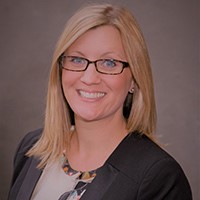
Mission Moment: Marie Martinez Israelite, MSW

link to videoThe mission of the NIA IMPACT Collaboratory is to build the nation’s capacity to conduct pragmatic clinical trials of interventions embedded within health care systems for people living with dementia and their care partners.   Our Mission Moments highlight the perspective of someone directly involved with dementia to remind us of the importance of our mission. In this Mission Moment, we hear from Marie Martinez Israelite, MSW, Director of Victim Services at the Human Trafficking Institute and care partner for her mother, a retired physician who is living with Alzheimer’s. Ms. Israelite spoke at the NIA IMPACT Steering Committee meeting in January 2020.


IMPACT Collaboratory Mission Moment: Marie Martinez Israelite from NIA IMPACT Collaboratory on Vimeo.

Rescuing Research Participants After Alzheimer Trials Stop Early

Jason Karlawish, MD and Emily Largent, PhD from the IMPACT Collaboratory Ethics and Regulation Core wrote an editorial reflecting on the unique ethical complexities around telling participants in an Alzheimer’s drug study that the study had abruptly ended. The story was also covered in the New York Times.

Click here to read the full JAMA Neurology editorial

Click here to read the article in the New York Times

Harrison outlines the need for embedded pragmatic clinical trails and how IMPACT can help in AcademyHealth editorial

, Executive Director for the IMPACT Collaboratory at Brown University, authored a blog post for AcademyHealth describing the need for embedded pragmatic clinical trails and how the IMPACT Collaboratory can help.

Harrison describes the rise in diagnoses of Alzheimer's disease and related dementias as a global public health crisis and describes how embedded pragmatic clinical trials can help to gather real world data for clinical trials, and incorporate diverse stakeholders into study design. Read the full blog post on the AcademyHealth website.

IMPACT principal investigators share their vision of the project with LeadingAge

The NIA IMPACT Collaboratory’s multiple principal investigators, Susan L. Mitchell, PhD, MPH, and Vincent Mor, PhD, shared the vision and goals of the project with LeadingAge in an article from January 17.

“We are confident that the NIA IMPACT Collaboratory will transform the delivery, quality, and outcomes of care provided to Americans with dementia, and their caregivers, by accelerating the testing and adoption of evidence-based interventions within health care systems,” says Mitchell.

The article includes a description of the problem of Alzheimer’s disease and related dementias, as well as how the structure of the IMPACT Collaboratory will help researchers who seek to conducted embedded pragmatic clinical trials to combat these conditions.

IMPACT leaders hope their collaborative efforts will identify and validate evidence-based programs that can be adopted across PLWD communities and help people live a higher quality of life. “The goal,” concludes Mor, “is to reduce the suffering of persons living with dementia, reduce the burden on the caregivers, and ease the challenge of humanely meeting the needs of this difficult-to-serve population, while maintaining their dignity—and I am confident we can achieve this.”

Read the full article at LeadingAge here.

Registration open for statistical conference focused on cluster randomized clinical trials

IMPACT Steering Committee and Design and Statistics Core member Monica Taljaard, PhD, will be part of a panel at the 13th University of Pennsylvania Conference on Statistical Issues in Clinical Trials  on April 29th.  The conference will focus on challenges and opportunities in cluster randomized clinical trials. Registration is now open. 

NIA IMPACT Collaboratory member speaks at NIH Collaboratory Grand Rounds

Richard Platt, MD, MS, a member of the Executive Committee for the NIA IMPACT Collaboratory Technical Data Core, was among the presenters at the NIH Health Care Systems Research Collaboratory Grand Rounds on Friday, December 6th. Details are below:

Topic

Millions More People, Stronger Collaborations: The New and Improved NIH Collaboratory Distributed Research Network

Date

Friday, December 6, 2019, 1:00-2:00 p.m. ET

Speakers

Richard Platt, MD, MS
Professor and Chair
Harvard Medical School
Department of Population Medicine

Kevin Haynes, PharmD, MSCE
Principal Scientist
HealthCore

Denise Boudreau, PhD
Senior Scientific Investigator
Kaiser Permanente Washington Health Research Institute

Jerry H. Gurwitz, MD
Professor of Medicine, Family Medicine and Community Health, and Population & Quantitative Health Sciences
University of Massachusetts Medical School
Executive Director, Meyers Primary Care Institute

Christopher B. Granger, MD
Professor of Medicine
Duke University


NIA IMPACT Collaboratory Stakeholder Engagement Team holds in-person meeting

The NIA IMPACT Collaboratory’s Stakeholder Engagement Team (SET) conducted an all-day meeting on December 3, 2019  at Hebrew SeniorLife in Boston, MA. Attendees included the SET, the Stakeholder Advisory Committee (SAC), and additional participants relevant to the IMPACT Collaboratory’s efforts regarding stakeholder engagement. Click here to see the full list of participants. .

The objectives were to:
1) Review the role of the SAC;
2) Provide advice to the IMPACT Collaboratory on how to integrate stakeholder engagement into its mission;
3) Strategize about the optimal way to assist the selection and guidance of pilot project; and
4) Discuss priority topics to address in guidance materials.

After a welcome from Gary Epstein-Lubow, MD, and Katie Maslow, MSW, Susan Mitchell, MD, MPH, presented an overview of the IMPACT Collaboratory. This was followed by personal messages about the importance of research to address aspects of the lived experience of dementia presented by a person living with dementia, Louise Phillips, MD, and a family caregiver and dementia care clinician, Katie Brandt, MIM.

Historic definitions of SE as prepared by the Patient-Centered Outcomes Research Institute were provided by Lori Frank, PhD, MA. Ellen Tambor, MA, presented SE work from the original NIH Collaboratory; this was followed by information from Katie Maslow about SE specific to dementia care research in the U.S.   The NIA IMPACT Collaboratory’s process for supporting pilot ePCTs was reviewed by Laurie Herndon, MSN, followed by suggestions from Jill Harrison, PhD, as to how stakeholders can be integrated into the pilot study processes.

In the afternoon, pilot study expectations were further explored as they relate to the involvement and engagement of people with lived experiences of dementia as well as a wide array of clinicians, service providers, health care system leaders, and payers.

Antonia Bennett, PhD, of the Collaboratory’s Patient and Caregiver Reported Outcomes (PCRO) Core and Monica Moreno, BS,  of the Alzheimer’s Association described the development of a “Lived Experience Panel”. This was followed by a discussion of engaging health systems leaders which was led by Alice Bonner, PhD, RN,  and included Lee Jennings, MD, MSHS, David Gifford, MD, MPH, and others.  The final session was an overview of selected advice from the SAC emanating from the day.

Outcomes of the meeting included:

1) Successful orientation of SAC members;
2) Preliminary plans for clarifying definitions and processes regarding SE within the Collaboratory;
3) Review of SE activities related to pilot study investigators; and
4) Discussion of SE activities including development of a Lived Experiences Panel, guidance documents for investigators, a logic model for SE activities within the Collaboratory, and methods for evaluation of SE activities.


Larson discusses strategies for preventing dementia in Wall Street Journal

Eric B. Larson, MD, MPH, leader of the NIA IMPACT Collaboratory Health Care Systems Core discussed prevention of dementia in a recent article in the Wall Street Journal.

The article from November 17, 2019 discusses findings from a report commissioned by the Lancet medical journal about dementia prevention research. The report shows that 35% of dementia cases may be preventable by using strategies such as exercise and engaging in stimulating memory activities. Dr. Larson, co-author of the Lancet report,  says dementia risk maybe be lowered by adopting some of these behaviors.

“When people ask me how to prevent dementia, they often want a simple answer, such as vitamins, dietary supplements, or the latest hyped idea,” says Dr. Larson. “I tell them they can take many common-sense actions that promote health throughout life.”

The Lancet report reviewed hundreds of studies that identify risk factors for dementia. The report found that controlling blood pressure, eating a healthy diet and getting enough sleep can also help to prevent dementia.

This story is modified from an article on Permanente Medicine. To read the full news story, visit The Wall Street Journal website (subscription required).

IMPACT on Alzheimer’s

Tlink to videohe National Institute on Aging (NIA) has awarded a five-year grant expected to total $53.4 million to Brown University and Boston-based Hebrew SeniorLife (HSL) to lead a nationwide effort to improve health care and quality of life for people living with Alzheimer’s disease and related dementias, as well as their caregivers. Read more at: https://www.brown.edu/news/2019-09-10....