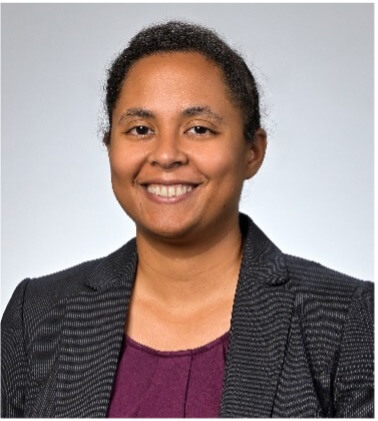

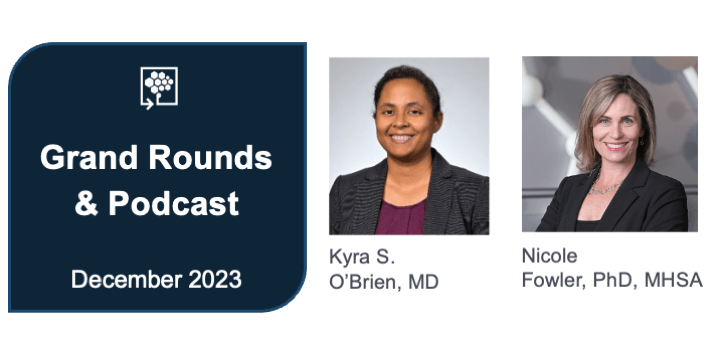
Graphic with headshots of Drs. O'Brien and Fowler from the shoulders up, next to the words "Grand Rounds & Podcast. December 2023"

The Clinical Implementation of Alzheimer’s Disease Biomarkers

December 2023 – In Grand Rounds 42, Drs. O'Brien and Fowler engage in a discussion regarding the landscape of Alzheimer's disease (AD) biomarker testing, dive into the potential clinical usefulness of plasma AD biomarkers, and identify the obstacles that hinder the implementation of plasma AD biomarkers.

Download Webinar Slides

Speakers

Kyra S. O'Brien, MD
Kyra S. O'Brien, MD

Assistant Professor of Neurology

Penn Memory Center, University of Pennsylvania

Nicole Fowler, PhD, MHSA

Associate Professor of Medicine

Indiana University School of Medicine

Learning Objectives

  • Understand the landscape of Alzheimer’s disease (AD) biomarker testing.
  • Describe the potential clinical utility of plasma AD biomarkers.
  • Identify barriers to plasma AD biomarker implementation in specialist and non-specialist settings.
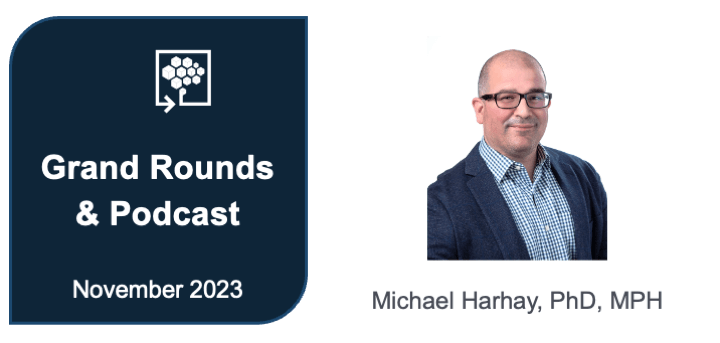

 

Graphic with a headshot of Dr. Michael Harhay from the shoulders up, next to the words "Grand Rounds & Podcast. November 2023"

Outcomes truncated by death in randomized trials

November 2023 – In Grand Rounds 41, Dr. Harhay addresses the impact of intercurrent events, specifically the occurrence of death in patients with critical illness during research studies, which can lead to missing outcome data and potentially biased results. Dr. Harhay discusses various approaches, such as composite outcomes, to navigate complexities of this missing data issue.

Speaker

Michael Harhay, PhD, MPH

Michael Harhay, PhD, MPH

Assistant Professor of Epidemiology and Medicine (Pulmonary and Critical Care)

University of Pennsylvania

Learning Objectives

  • Articulate the risks of bias associated with having outcomes truncated by death in randomized trials.
  • Assess options to address outcomes truncated by death using the estimand framework.
  • Understand tradeoffs between approaches such as statistical models and composite outcome to address outcomes truncated by death.


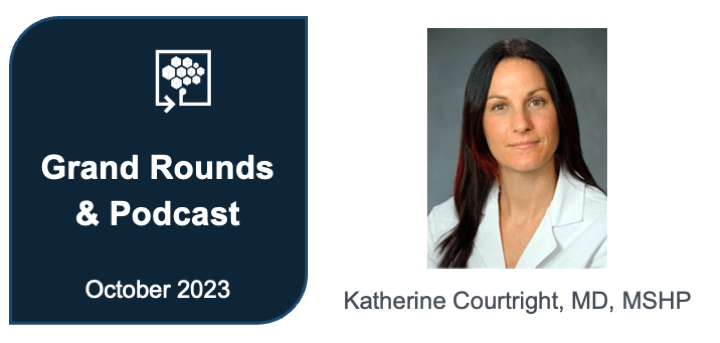
Graphic with a headshot of Dr. Katherine (Katie) Courtright from the shoulders up, next to the words "Grand Rounds & Podcast. October 2023"

Electronic Nudges and Pragmatic Trials to Improve Hospital Palliative Care Delivery

October 2023 – In Grand Rounds 40, Dr. Courtright shares the integration of systematic referral criteria ("triggers") with behavioral insights to nudge clinicians, offering a low-cost, scalable, and powerful approach to promote palliative care delivery.

Speaker

Katherine Courtright, MD, MSHP

Katherine Courtright, MD, MSHP

Assistant Professor of Medicine
Palliative and Advanced Illness Research (PAIR)

Perelman School of Medicine, University of Pennsylvania

Learning Objectives

  • Consider ways to leverage technology within a learning health system to improve palliative care delivery.
  • Describe choice architecture and tradeoffs with different types of behavioral nudges.
  • Anticipate implementation challenges and opportunities for nudges to improve inpatient palliative care delivery.


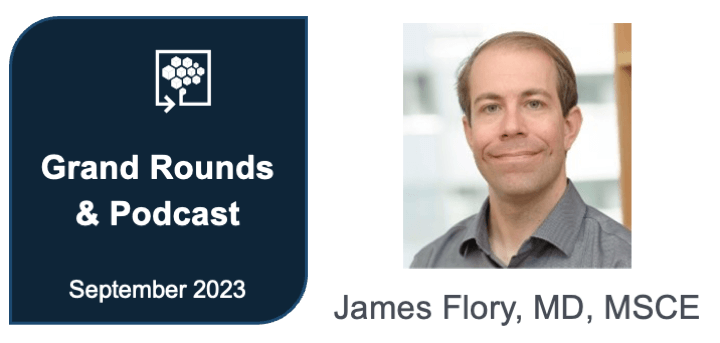
Graphic with a headshot of Dr. James Flory from the shoulders up, next to the words "Grand Rounds & Podcast. September 2023"

Decision Architecture Randomization Trials: Extremely Low-Cost Trials with Preservation of Clinician and Patient Choice

September 2023 – In Grand Rounds 39, Dr. Flory introduces an innovative trial design known as Decision Architecture Randomization Trials (DART), which aims to utilize the 'decision architecture' of electronic health records to incorporate randomized nudges into various prescribing decisions.

Speaker

James Flory, MD, MSCE

James Flory, MD, MSCE

Assistant Attending Physician

Endocrinology Service

Memorial Sloan Kettering Cancer Center

Learning Objectives

  • Define ‘nudges’, ‘decision architecture’, and ‘A/B testing’.
  • Describe a decision architecture randomization trial (DART).
  • Understand how DART relates to other pragmatic clinical trial designs.


Results and Lessons Learned from the HAS-QOL ePCT

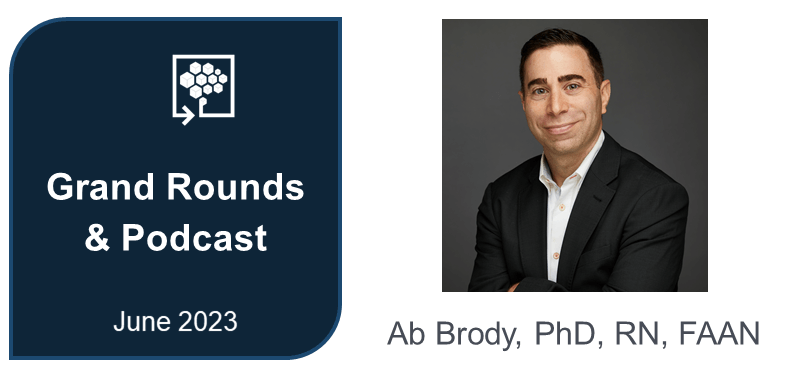
June 2023 – In Grand Rounds 38, Dr. Brody dives into the results and lessons learned from the Hospice Advanced Dementia Symptom Management and Quality of Life (HAS-QOL) ePCT, a 25-site trial exploring a quality improvement program tailored to improve care for PLWD and their care partners receiving hospice across care settings.

Download Webinar Slides

Speaker


Ab Brody, PhD, RN, FAANAb Brody, PhD, RN, FAAN

Founder, Aliviado Health

Pilot Studies Core Leader, NIA IMPACT Collaboratory

Mathy Mezey Professor, NYU Rory Meyers College of Nursing
Associate Director, Hartford Institute for Geriatric Nursing

Learning Objectives

  • Understand the current gaps and challenges in providing effective care to people living with dementia and their care partners in hospice.
  • Describe the process of preparing a full-scale ePCT.
  • Summarize challenges and effective solutions, including human support and technology-based strategies, to sustain interdisciplinary dementia care workforce training in hospice settings amid COVID-19 in a 25-site ePCT.


Mission Moment: Marie M. Desir, Senior Patient Care Associate (PCA) at Hebrew SeniorLife

Marie M. Desir, Senior Patient Care Associate (PCA) at Hebrew SeniorLife provided this year’s mission moment for the IMPACT Collaboratory Annual Steering Committee & Business Planning Meeting, held on April 11, 2023.

Ms. Desir shared her unique experience as a frontline member of the healthcare team working with people living with dementia during the COVID-19 pandemic.

Ms. Desir provided a heartfelt description of the challenges that providers, patients, and families faced throughout the pandemic. She provided examples of how her team maintained their humor and humanity to overcome obstacles to good caregiving. Her account received a standing ovation for her inspiring mission moment.

eRADAR: An embedded, pragmatic trial using electronic health record data for targeted dementia screening

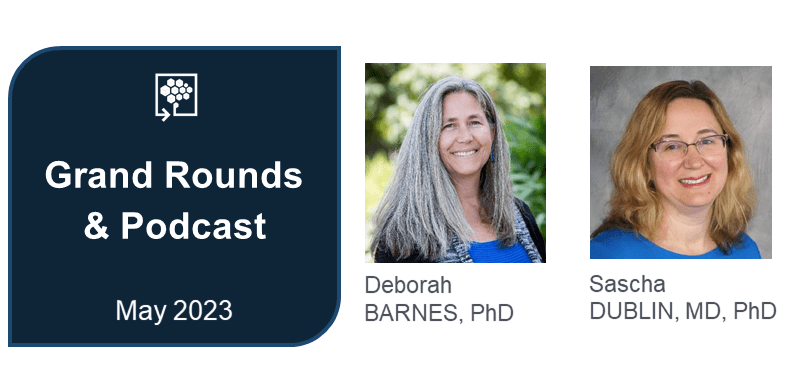
May 2023 – In Grand Rounds 37, Drs. Barnes and Dublin discuss the use of eRADAR - electronic health record (EHR) Risk of Alzheimer's and Dementia Assessment Rule - for targeted dementia screening in higher-risk older adults.

Download Webinar Slides

-

Speakers


Deborah Barnes, PhD Deborah Barnes, PhD 

Professor
Psychiatry and Behavioral Sciences
Epidemiology & Biostatistics

University of California, San Francisco


Sascha Dublin, MD, PhDSascha Dublin, MD, PhD

Senior Investigator

Kaiser Permanente Washington Health
Research Institute

Learning Objectives

  • Describe eRADAR's accuracy for identifying older patients at risk of undiagnosed dementia.
  • Describe patient acceptance of targeted screening for dementia using eRADAR.
  • Describe preliminary outcomes of brain health assessment visits.

More than a Meal: Results from a Pilot Pragmatic Clinical Trial Evaluating Two Models of Home-Delivered Meals for Older Adults Living with Dementia

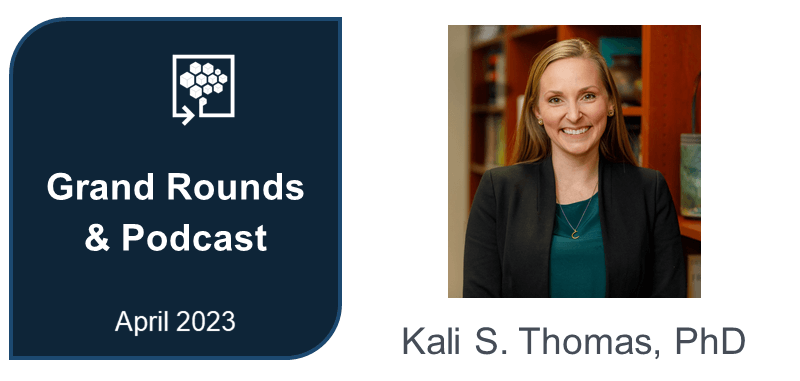
April 2023 – In Grand Rounds 36, Dr. Kali S. Thomas shares findings from a pilot pragmatic clinical trial that evaluated the impact of two models of home-delivered meals for older adults living with dementia.

Speaker

Kali S. Thomas, PhDKali S. Thomas, PhD

Associate Professor
Health Services, Policy & Practice

Brown University

Learning Objectives

  • Understand the steps taken to design a pilot pragmatic randomized control trial comparing two types of home-delivered meals among older adults living with dementia.
  • Describe the feasibility of conducting this study, including recruitment, retention, and assessment procedures.
  • Summarize the process for linking data to examine trends in treatment effects.


Causal Inference in Pragmatic Trials

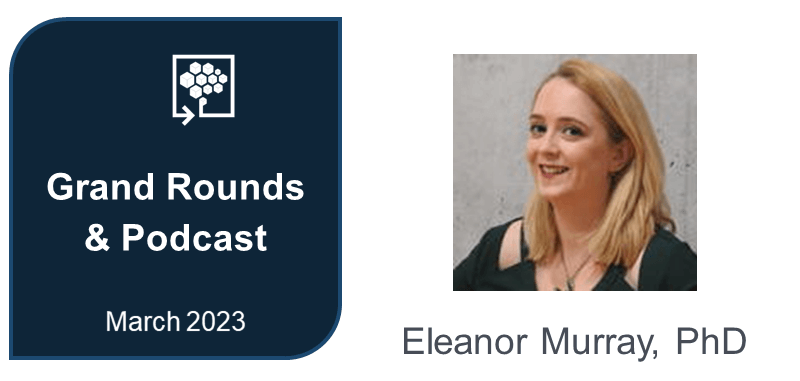
March 2023 – In Grand Rounds 35, Dr. Eleanor "Ellie" Murray explores causal inference in randomized pragmatic trials highlighting topics such as immortal time bias, per-protocol effects, and how to use the SMARTER acronym when thinking about causal research questions.

Speaker

Eleanor Murray, PhD

Eleanor Murray, PhD

Assistant Professor
Epidemiology

Boston University School of Public Health
@EpiEllie

Learning Objectives

  • Discuss the properties of a good causal research question.
  • Identify two key sources of potential bias common in pragmatic trials.
  • Recognize pragmatic trial scenarios requiring sophisticated causal inference statistical methods.


Methods for Designing Cluster Randomized Trials to Detect Treatment Effect Heterogeneity

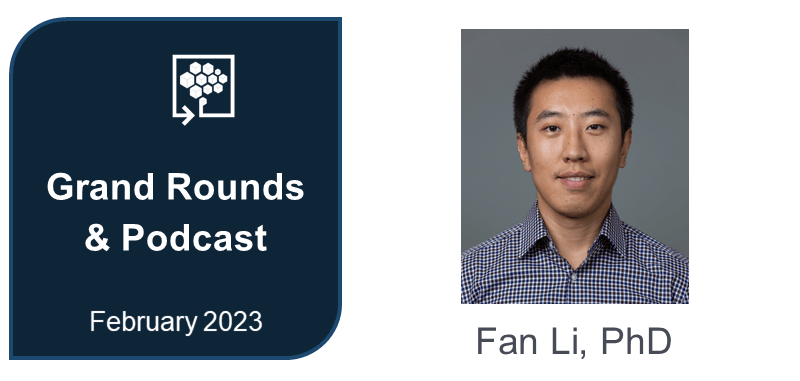
February 2023 – In Grand Rounds 34, IMPACT Design and Statistics Executive Committee Member, Dr. Li, sheds light on several methods for designing cluster randomized trials (CRTs) to detect the variability of treatment effects for individuals within a population, also known as heterogeneity of treatment effect (HTE).

Speaker

Fan Li, PhD

Fan Li, PhD

Assistant Professor
Department of Biostatistics

Yale School of Public Health

Learning Objectives

  • Understand the sample size requirements for testing treatment effect heterogeneity in cluster randomized trials.
  • Be aware of tools for designing cluster randomized trials.
  • A call for involving statisticians at the outset to design cluster randomized trials.