

Special COVID Grand Rounds June 2020

Covid-19 Among Older Persons in Health Care Systems: Pragmatic Responses to the Crisis

June 2020 – In this Special Grand Rounds, Drs. Lipsitz, Rudolph, and White discuss their ongoing projects to meet the unique challenges COVID-19 presents managing care of older persons.

Download webinar slides.

Lewis Lipsitz, MD

Lewis Lipsitz, MD
Marcus Institute for Aging Research
Hebrew SeniorLife

James Rudolph, MD

James Rudolph, MD
Brown University

Elizabeth White, PhD, ARPN

Elizabeth White, PhD, ARPN
Brown University

Learning Objectives

  • Describe key ethical issues raised by pragmatic RCTs and which may be particularly salient to the ADRD context
  • Describe the challenges of identifying a sample of pragmatic RCTs from the literature
  • Describe the landscape of key ethical issues in published pragmatic RCTs in ADRD
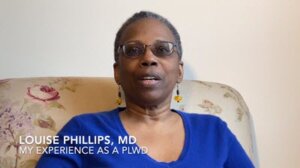
Mission Moment: Louise Phillips, MD

link to videoThe mission of the NIA IMPACT Collaboratory is to build the nation’s capacity to conduct pragmatic clinical trials of interventions embedded within health care systems for people living with dementia and their care partners.   Our Mission Moments highlight the perspective of someone directly involved with dementia to remind us of the importance of our mission. In this Mission Moment, Louise Phillips, MD shares her experience as a person living with dementia and a retired physician.


Stakeholder Engagement in ePCTs for People Living with Dementia

May 2020 – In Grand Rounds 6, Ellen Tambor, MA from IMPACT's Engaging Partners Team presents on the special considerations for engaging stakeholders in ePCTs for AD/ADRD and provides an overview of plans for promoting meaningful stakeholder engagement in the IMPACT Collaboratory.

Speaker

Ellen Tambor, MA

Ellen Tambor, MA

Executive Committee, Engaging Partners Team

Research Director, Center for Medical Technology Policy

Learning Objectives

  • Describe the rationale for stakeholder engagement in research and the importance of engaging stakeholders in ePCTs
  • Understand special considerations for engaging stakeholders in ePCTS for AD/ADRD.
  • Describe plans for promoting robust stakeholder engagement throughout the IMPACT Collaboratory.
COVID-19 Grand Rounds & Podcast May 2020

COVID-19 in Nursing Homes: Pragmatic Research Responses to the Crisis

May 2020 – In this Special Grand Rounds, Drs. Grabowski, Mitchell, and Mor, experts in dementia care and pragmatic clinical trials, provide an update on how COVID-19 is impacting nursing homes and to share preliminary data for research related to COVID-19.

Download Webinar Slides

David Grabowski, PhD

David Grabowski, PhD

Professor of Health Care Policy

Department of Health Care Policy, Harvard Medical School

Vince Mor, PhD 

Vince Mor, PhD 

Principal Investigator, Administration Core (AC)
Member, Steering Committee

Professor of Health Services, Policy & Practice and the Florence Pirce Grant University Health, Brown University School of Public Health
Research Health Scientist, Providence Veterans Administration Medical Center

Susan Mitchell, MD, MPH

Susan Mitchell, MD, MPH

Principal Investigator, Administration & Management Core (AC)
Member, Steering Committee

Senior Scientist, Hebrew SeniorLife’s Hinda and Arthur Marcus Institute for Aging Research
Professor of Medicine, Harvard Medical School
Faculty, Division of Geriatrics, Beth Israel Deaconess Medical Center


Learning Objectives

  • Learn about impact of COVID-19 in U.S nursing homes
  • Gain knowledge about rapid pragmatic research approaches in response to the crisis in health care systems
    • Hebrew SeniorLife
    • Genesis Health Care
    • Bluestone


Health equity as foundational to the design of pragmatic trials

April 2020 – In Grand Rounds 5, Drs. Quiñones and Jackson discuss health equity issues have not yet been fully considered, assessed, or integrated into ePCT designs. Health disparities populations may not be well represented in ePCTs without special efforts to identify and successfully recruit sites of care that serve larger numbers of these populations.


Speakers

Ana Quiñones, PhD, MS

Ana Quiñones, PhD, MS

Team Leader, Health Equity Team (HET)

Associate Professor, Department of Family Medicine, OHSU-PSU School of Public Health, Oregon Health & Science University

Jonathan Jackson, PhD

Jonathan Jackson, PhD
Executive Committee, Health Equity Team (HET)

Instructor in Neurology, Massachusetts General Hospital
Instructor, Harvard Medical School

Learning Objectives

  • Understand the role and objectives of the Health Equity Team in the IMPACT Collaboratory.
  • Describe the conceptualization of health equity as it relates to ePCTs design.
  • Understand and describe important health equity considerations in the design of ePCTs.


IMPACT Health Equity Team

The Health Equity Team (HET) focuses on developing and implementing strategies to address diversity and inclusion in the conduct of ePCTs for people living with dementia (PLWD) and their care partners to ensure the IMPACT Collaboratory is a national resource for all Americans afflicted with dementia. Learn more about how the HET is working to increase health equity in dementia care from Core Leader Ana Quiñones, PhD, MS.


The IMPACT Collaboratory Health Equity Team from NIA IMPACT Collaboratory on Vimeo.

IMPACT Ethics and Regulation Core

The Ethics and Regulation Core (previously known as the Regulation and Ethics Core) focuses on clarifying the balance among the competing priorities of conducting ePCTs in people living with dementia (PLWD) and their care partners, protecting the interests of participants, and assuring health care systems that regulatory issues are addressed. Learn more about the core's work from Core Leader Jason Karlawish, MD.


The IMPACT Collaboratory Regulation and Ethics Core from NIA IMPACT Collaboratory on Vimeo.


Modifications and Waivers of Informed Consent in Pragmatic Clinical Trials

February 2020 – In Grand Rounds 4, Dr. Karlawish discusses waivers and alterations of written informed consent in pragmatic clinical trials (ePCTs). He provides two case studies of ePCTs to determine whether or not it is appropriate to permit a modification or a waiver of research informed consent.

Speaker

Jason Karlawish, MD

Jason Karlawish, MD
Core Leader, Ethics & Regulation Core

Professor of Medicine, Medical Ethics and Health Policy, and Neurology
Co-Director, Penn Memory Center, University of Pennsylvania

Learning Objectives

  • Identify how consideration of ethical and regulatory issues in the design phase of an ePCT with PLWD can help make the study more pragmatic.
  • Review the regulatory requirements for a waiver or alteration of informed consent and discuss related ethical considerations.
  • Apply what we’ve covered to two case studies.


Additional Resources

  • 45 CFR 46 – Protection of Human Subjects
  • Scott Kim and Frank Miller. “Waivers and alterations to consent in pragmatic clinical trials: Respecting the principle of respect for persons.” IRB: Ethics and Human Research. January-February 2016, Vol 38, issue 1.
  • January 31, 2008 SACHRP letter to HHS Secretary: Recommendations related to waiver of informed consent and interpretation of “minimal risk,” available at https://hhs.gov/ohrp/sachrp-committee/recommendations/2008-january-31-letter/index.html

An Introduction to the NIA IMPACT Collaboratory

Richard J. Hodes, MD, Director of the National Institute of Aging and Partha Bhattacharyya, PhD, the IMPACT Collaboratory Project Officer and Program Director in the Division of Behavioral and Social Research, share their thoughts on the need for the IMPACT Collaboratory and the project goals.


An Introduction to the NIA IMPACT Collaboratory from NIA IMPACT Collaboratory on Vimeo.