
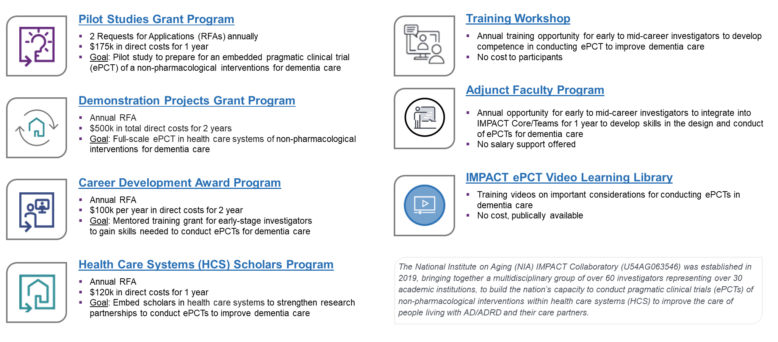
IMPACT Funding, Training, and Engagement Opportunities Video
August 13, 2021

June 2021 – In Grand Rounds 18, Drs. Teno and Saliba discuss the use of administrative data, including the Minimum Data Set (MDS) in pragmatic clinical trials and share examples of how they have used this data in their own pragmatic clinical trials.
Joan M. Teno, MD, MS
Professor of Medicine, Oregon Health & Science University
Adjunct Professor of Health Services, Policy, & Research, Brown University School of Public Health Physician Scientist, VA Los Angeles, GRECC and HSR&D COIN
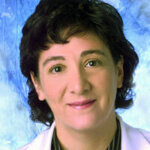
Debra Saliba, MD, MPH
Anna & Harry Borun Endowed Chair, Geriatrics and Gerontology, UCLA
Director, UCLA/JH Borun Center for Gerontological Research
Physician Scientist, VA Los Angeles, GRECC and HSR&D COIN

May 2021 – In Grand Rounds 17, Claire Chan presents on the growing number of studies described as pilot or feasibility studies, and describes the challenges in defining and designing these studies.

Claire Chan, MSc
Statistician
Institute of Population Health Sciences (IPHS)
Queen Mary University of London
s
Podcast Transcript: Download the transcript here.
Vince Mor, PhD, one of IMPACT Collaboratory’s two Principal Investigators, and team recently shared results from their investigation into the impact of SARS-CoV-2 vaccine among nursing home residents from 280 nursing homes in 21 states. Results were published in the Journal of the American Geriatrics Society on April 16th.
Researchers partnered with Genesis Healthcare, the largest long-term care provider in the country, for the study, which was a supplement award through the IMPACT Collaboratory. They monitored the impact of the SARS-CoV-2 vaccine rollout among nursing home residents in 280 nursing homes within 21 states. Both the Moderna and Pfizer-BioNTech vaccines were included in the study. Researchers created two groups of participating facilities based on the date of their initial vaccine clinic and conducted a matched pair analysis of outcomes.
One week after their initial vaccine clinics, nursing homes with earlier clinics had 2.5 fewer new SARS‐CoV‐2 infections per 100 at‐risk residents than expected based on the experiences of matched facilities with later clinics. Cumulatively over 7 weeks, earlier vaccinated facilities had 5.2 fewer infections per 100 at‐risk residents and 5 fewer hospitalizations and/or deaths per 100 infected residents than expected without vaccinations. These results indicate that the vaccine led to a reduction in incident infections, morbidity, and mortality in this large multi-state nursing home population.
The researchers also suggested the findings support efforts to begin resuming family visitation and lessen other restrictions in nursing homes.

April 2020 – In Grand Rounds 16, Dr. Wilkins discusses the definitions of inclusion, diversity and equity in pragmatic clinical trials, and offers insight into how research can be more inclusive and diverse.

Consuelo H. Wilkins, MD, MSCI
Vice President for Health Equity, VUMC
Associate Dean for Health Equity, Vanderbilt SOM
Associate Director, Vanderbilt Institute for Clinical and Translational Science
Professor of Medicine, Division of Geriatric Medicine
Podcast Transcript: Download the transcript here
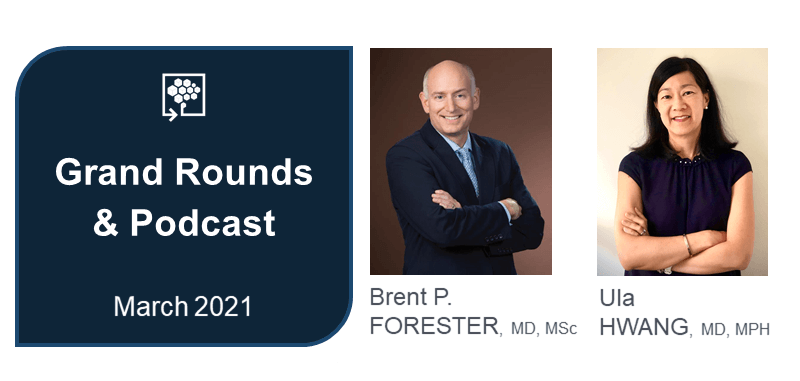
March 2021 – In Grand Rounds 15, Drs. Forester and Hwang share experiences as Pilot Cycle 1 awardees and provide updates to their funded pilot studies.
Brent P. Forester, MD, MSc on his pilot: Implementation of the Care Ecosystem training model for individuals with dementia in a high risk, integrated care management program
Ula Hwang, MD, MPH on her pilot: Pathway to Detection & Differentiation of Delirium & Dementia in the Emergency Department

Brent P. Forester, MD, MSc
Chief, Center of Excellence in Geriatric Psychiatry, McLean Hospital Medical
Director, Behavioral Health Integration, Quality, and Patient Experience, Mass General Brigham

Ula Hwang, MD, MPH
Professor, Vice Chair for Research, Department of Emergency Medicine
Yale School of Medicine
Dr. Forester:
Dr. Hwang:
 Stuart Nicholls, PhD, from the Clinical Epidemiology Program at the Ottawa Hospital Research Institute, continues the discussion from his February 18 Grand Rounds presentation. This discussion with IMPACT Principal Investigator Susan Mitchell, MD, MPH answers questions from Dr. Nicholls's presentation on giving an overview of ethical issues raised by pragmatic randomized controlled trials (RCTs) and which derive from ongoing work to develop guidance for those designing and conducting pragmatic RCTs.
Want to hear more? View the full Grand Rounds presentation.
For alerts about new episodes, subscribe free on iTunes or SoundCloud.
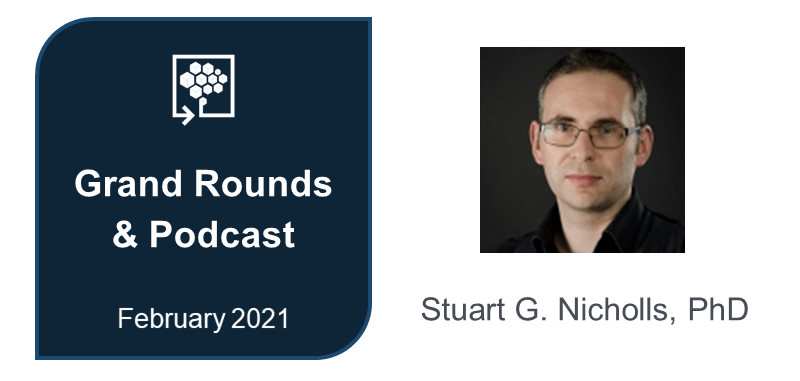
February 2021 – In Grand Rounds 14, Dr. Nicholls provides an overview of ethical issues raised by pragmatic randomized controlled trials (RCTs), outlines challenges in conducting empirical studies of the published literature, and provides preliminary data on the reporting of key ethical issues in published pragmatic RCTs in AD/ADRD.

Stuart G. Nicholls, PhD
Ottawa Health Research Institute
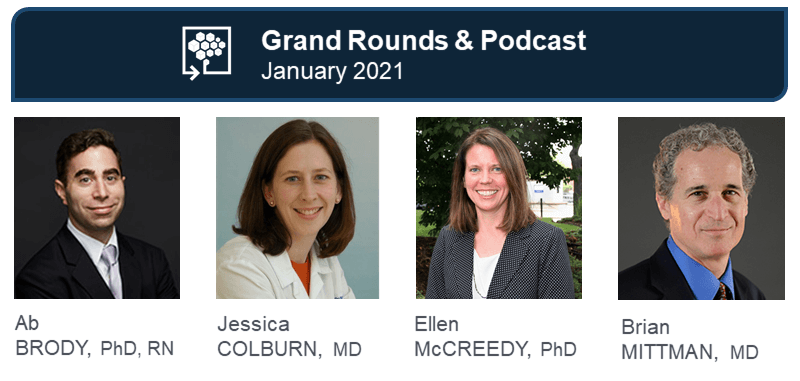
January 2021 – Ground Rounds 13, features Drs. Brody, McCreedy, and Colburn providing examples of ongoing implementation of ePCTs within health care systems for people with AD/ADRD followed by a response from Dr. Mittman, a prominent scientist with expertise in implementation of complex interventions in health care systems.

December 2020 – In Grand Rounds 12, Dr. Halpern discusses improving care through large pragmatic trials. Dr. Halpern reviews explanatory trials in serious illness care, informed consent, and many other approaches of pragmatic clinical trials to improve the palliative care for seriously ill, hospitalized patients.