
January 31, 2026 Continue reading

Professor, Division of Geriatric Medicine and Director, UNC Palliative Care Program, University of North Carolina School of Medicine

Claire Ankuda, MD, MPH
Associate Professor, Icahn School of Medicine at Mount Sinai
Associate Director of Marcus Institute for Aging Research, Associate Professor of Medicine, Harvard Medical School
Courtney Van Houtven, PhD
Professor, Population Health Sciences, Duke University School of Medicine and Duke-Margolis Institute for Health Policy
IMPACT community members, Joan Carpenter, PhD, CRNP, Nancy Hodgson, PhD, RN, and Laura Hanson, MD, MPH share the results of their recent pilot pragmatic trial which was supported by the National Institute of Nursing Research of the National Institutes of Health under Award Number K23NR017663 and the Rita & Alex Hillman Foundation, New York.
The trial explores the feasibility of implementing a palliative care intervention during post-acute care to improve outcomes and reduce the need for rehospitalizations.
The two-group, multisite feasibility pilot pragmatic clinical trial, which was conducted at 12 SNFs co-located in continuing care retirement communities in the Northeast and Mid-Atlantic United States, evaluated the feasibility of implementing the primary palliative care in post-acute care (PPC-PAC) intervention in the post-acute care skilled nursing facility (SNF) setting.
Implementation of the PPC-PAC intervention proved feasible and acceptable among older adults and clinicians. Future research is needed to focus on testing the effectiveness of PPC-PAC and explore strategies for optimal intervention implementation and SNF staff engagement.
Read the full article here.
Joshua Niznik, PharmD, PhD, IMPACT Patient and Caregiver Relevant Outcomes (PCRO) Core member and Assistant Professor at The University of North Carolina School of Medicine, shared insights with The Washington Post about the complex relationship between sleep aids and dementia risk. Dr. Niznik’s perspective highlights the need for careful consideration when using these medications, particularly in relation to cognitive health.
Read the full article at https://wapo.st/4jQLcAO
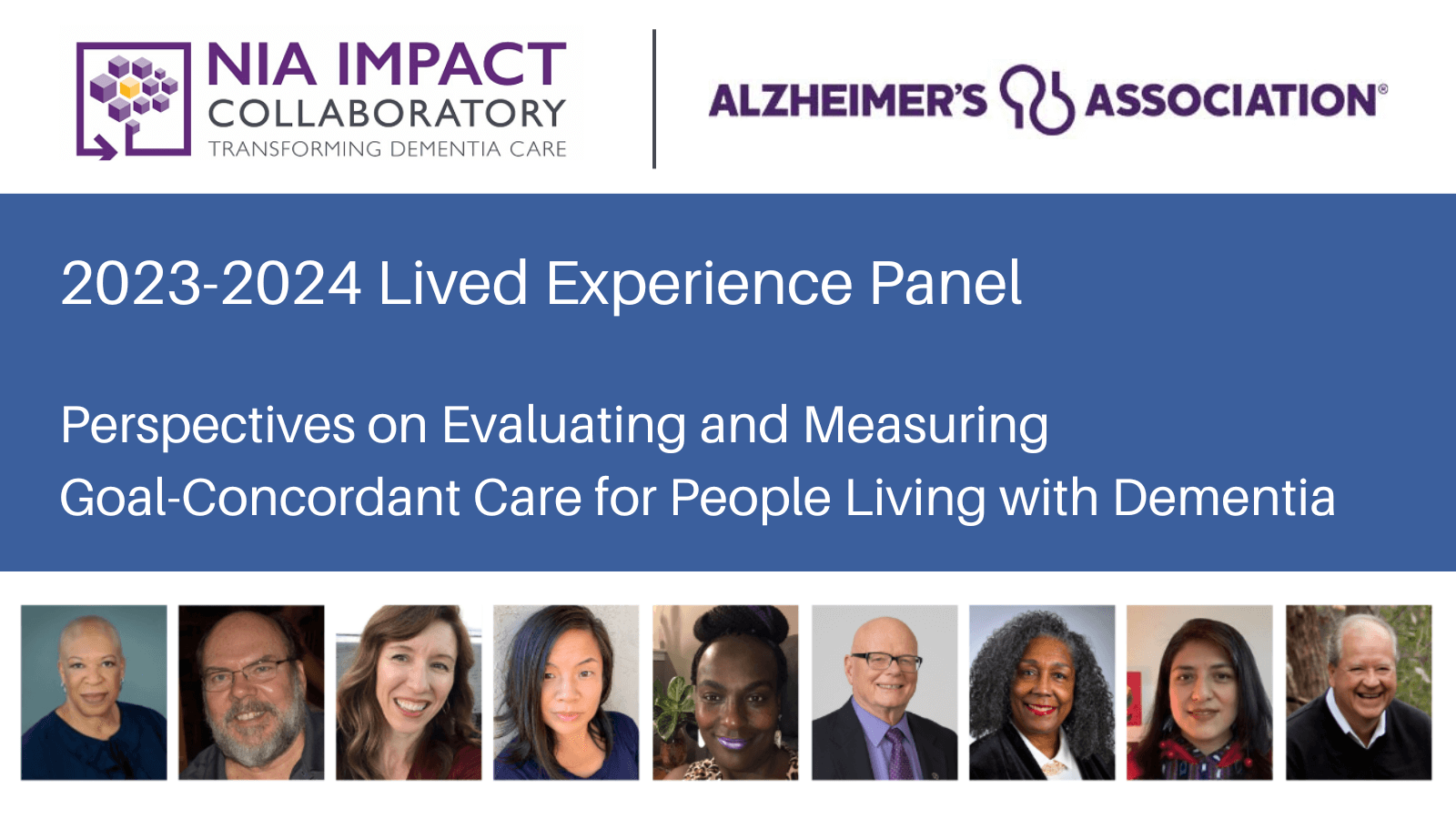
Introducing the 2023-2024 Lived Experience Panel Report: Perspectives on Evaluating and Measuring Goal-Concordant Care for People Living with Dementia by IMPACT and LEP members including Joshua Niznik, Antonia Bennett, Natalie C. Ernecoff, Sheryl Zimmerman, Kathryn Wessell, Laura Hanson, Gary Epstein-Lubow, Carolyn Malone, Willetha Barnette, Bart Brammer, Katie Brandt, Roberta Cruz, Monica Downer, Darrell Foss, LuPita Gutierrez-Parker, Freddye G. James, Judith S. Rocha, Anthony Wagner.
The report describes the insights and lessons learned from a series of 3 meetings between the IMPACT Lived Experience Panel and members of the Patient and Caregiver Relevant Outcomes Core. The topic of discussion was goal-concordant care as it occurs in the real world and as it is measured in research. Panel members discussed their experiences talking about their goals of care with their healthcare providers and how thinking about their goals could help them make healthcare decisions. Discussions unveiled some surprising discordance between panel members’ experiences and researcher expectations, which resulted in a series of challenges and recommendations for future efforts.
Read the full report to learn more!
July 10, 2024
Authors: Joshua Niznik, PharmD, PhD, Antonia Bennett, PhD, Natalie C. Ernecoff, PhD, MPH, Sheryl Zimmerman, PhD, Kathryn Wessell, MPH, Laura Hanson, MD, Gary Epstein-Lubow, MD, MPH, Carolyn Malone, MPH, Willetha Barnette, Bart Brammer, Katie Brandt, Roberta Cruz, Monica Downer, Darrell Foss, LuPita Gutierrez-Parker, Freddye G. James, Judith S. Rocha, Anthony Wagner
Description: This report describes the major lessons learned from a series of discussions between people living with dementia, care partners, researchers, healthcare providers, and other community members about ways to improve the quality of healthcare for people living with dementia. The main topic of these discussions was ‘goal-concordant care’ which means ensuring that healthcare treatments and decisions are in line with what matters most to patients and families. Panel members were asked to discuss their experiences talking about goals with their healthcare providers and how thinking about their goals could help with making healthcare decisions. Some key takeaway points are:
Further study is needed to identify strategies to ensure that people living with dementia and care partners are actively involved in decision-making and in identifying the best ways to measure whether the needs and priorities of people living with dementia and care partners are being met.
Read the full report here.
IMPACT’s Laura Hanson MD, MPH, Professor of Medicine at The University of North Carolina at Chapel Hill, will assist Stacy Fisher, MD, who was recently selected as the new Scientific Advisor of The American Academy of Hospice and Palliative Medicine (AAHPM). The positions will guide AAHPM’s efforts to advance research in hospice and palliative care and deepen its relationships with key partners in the field. In addition to research goals, the Scientific Advisor will support researcher mentoring, training and career development.