
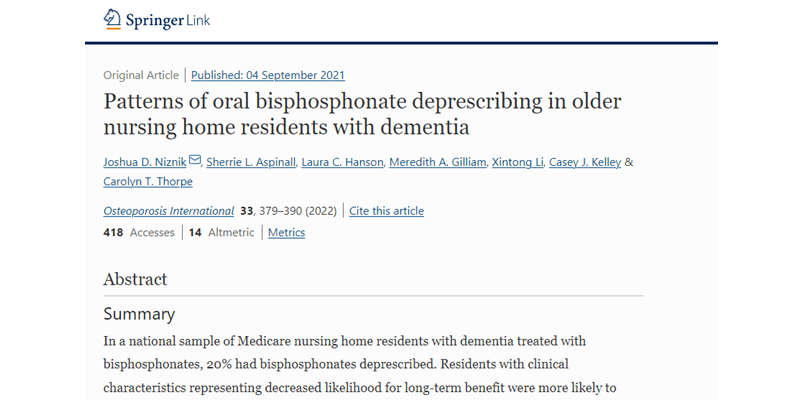
Patterns of Oral Bisphosphonate Deprescribing in Older Nursing Home Residents with Dementia
September 4, 2021
The NIA IMPACT Collaboratory Patient and Caregiver Relevant Outcomes (PCRO) Core has created the IMPACT PCRO iLibrary to help investigators seeking to develop pragmatic clinical trials in people living with Alzheimer’s disease and related dementias (AD/ADRD).
The IMPACT PCRO iLibrary is an online, searchable and interactive resource containing information on selected outcome measures derived from existing data sources for pragmatic trials enrolling people with AD/ADRD. The members of the PCRO core selected the outcome measures based on their relevance to the lived experience of people with AD/ADRD and their care partners. In addition, the selected outcomes have pragmatic characteristics that make them good candidates for use in embedded pragmatic clinical trials (ePCTs). Pragmatic outcome measures allow for efficient and uniform data capture across multiple sites and large diverse populations, while minimizing burden on people living with dementia or their care partners.
“The IMPACT PCRO iLibrary is a unique resource for investigators who lead pragmatic trials to improve outcomes for people living with dementia and their care partners,” Laura Hanson, MD, MPH, PCRO Core Leader.
“When designing a clinical trial, the first question is often, ‘What outcome are we trying to improve?” said Dr. Hanson. “When we began the work of the PCRO Core, we quickly recognized that it’s easy to find outcome measures, but really challenging to learn if these outcomes fit the needs of a pragmatic trial.”
Dr. Hanson led the effort to create the library supported by Project Manager Kathryn Wessell, MPH. They began by organizing information about potential outcome measures in existing data sources. PCRO Core Executive Committee Members, Joan Teno, MD, MS and Debra Saliba, MD, MPH, shared their expertise working with the Minimum Data Set for Nursing Homes (MDS), Consumer Assessment of Healthcare Providers and Systems (CAHPS) Hospice Survey, and claims data to create the initial version of the library. Spencer Hey, PhD, of the IMPACT Ethics and Regulation Core, used AirTable to create the library and developed an instructional video on how to use the resource. Other members of the PCRO Core who contributed to the library include:
“The PCRO iLibrary will grow and expand with the broader IMPACT Collaboratory, as more ADRD investigators conduct ePCTs, and share what works to capture relevant outcomes,” said Dr. Hanson. “Within the next year, the PCRO iLibrary will expand to include selected patient or caregiver-reported outcomes rated for their pragmatic properties.”
Phase 2 of the PCRO iLibrary will also include collaboration with David Meyers, PHD, MPH, of the IMPACT Technical Data Core, to continue to expand the library.
To learn more about the PCRO iLibrary and use this resource, visit https://impactcollaboratory.org/pcro-library/.

June 2021 – In Grand Rounds 18, Drs. Teno and Saliba discuss the use of administrative data, including the Minimum Data Set (MDS) in pragmatic clinical trials and share examples of how they have used this data in their own pragmatic clinical trials.

Joan M. Teno, MD, MS
Professor of Medicine, Oregon Health & Science University
Adjunct Professor of Health Services, Policy, & Research, Brown University School of Public Health Physician Scientist, VA Los Angeles, GRECC and HSR&D COIN
Debra Saliba, MD, MPH
Anna & Harry Borun Endowed Chair, Geriatrics and Gerontology, UCLA
Director, UCLA/JH Borun Center for Gerontological Research
Physician Scientist, VA Los Angeles, GRECC and HSR&D COIN
test1
est2
Phasellus vehicula magna sit amet dui pulvinar vulputate. Cras viverra faucibus metus, sit amet eleifend neque sodales aliquet. Pellentesque tempus lectus urna, nec rutrum nunc euismod quis. Quisque pretium id est nec imperdiet. Duis vel malesuada risus, at rutrum diam. Nullam nec massa a orci blandit ultricies non id eros. Aenean rhoncus elit ut mi accumsan tincidunt. Pellentesque in eros fermentum, efficitur neque non, ullamcorper quam. Donec maximus enim eget arcu pulvinar elementum. Aliquam et auctor massa. Aenean et turpis dictum, varius tortor in, fringilla risus. Nulla non ligula dapibus, placerat nulla vel, hendrerit risus. Donec vel tortor turpis. In felis magna, pretium id varius non, euismod sit amet felis.
Phasellus vehicula magna sit amet dui pulvinar vulputate. Cras viverra faucibus metus, sit amet eleifend neque sodales aliquet. Pellentesque tempus lectus urna, nec rutrum nunc euismod quis. Quisque pretium id est nec imperdiet. Duis vel malesuada risus, at rutrum diam. Nullam nec massa a orci blandit ultricies non id eros. Aenean rhoncus elit ut mi accumsan tincidunt. Pellentesque in eros fermentum, efficitur neque non, ullamcorper quam. Donec maximus enim eget arcu pulvinar elementum. Aliquam et auctor massa. Aenean et turpis dictum, varius tortor in, fringilla risus. Nulla non ligula dapibus, placerat nulla vel, hendrerit risus. Donec vel tortor turpis. In felis magna, pretium id varius non, euismod sit amet felis.
Phasellus vehicula magna sit amet dui pulvinar vulputate. Cras viverra faucibus metus, sit amet eleifend neque sodales aliquet. Pellentesque tempus lectus urna, nec rutrum nunc euismod quis. Quisque pretium id est nec imperdiet. Duis vel malesuada risus, at rutrum diam. Nullam nec massa a orci blandit ultricies non id eros. Aenean rhoncus elit ut mi accumsan tincidunt. Pellentesque in eros fermentum, efficitur neque non, ullamcorper quam. Donec maximus enim eget arcu pulvinar elementum. Aliquam et auctor massa. Aenean et turpis dictum, varius tortor in, fringilla risus. Nulla non ligula dapibus, placerat nulla vel, hendrerit risus. Donec vel tortor turpis. In felis magna, pretium id varius non, euismod sit amet felis.
Sheryl Zimmerman, PhD, a member of the executive committee for the IMPACT Patient and Caregiver Relevant Outcomes Core, was recently quoted in a New York Times opinion piece about the impact of isolation on nursing home residents during the COVID-19 pandemic.
“We’ve lost part of the long-term care work force by restricting families,” said Zimmerman, who is also co-director of the Program on Aging, Disability and Long-Term Care at the University of North Carolina at Chapel Hill and the School of Social Work. “Sure, the risk of spreading COVID-19 (or any other infectious disease) is less when visitors are restricted, but the consequence of social detachment may be greater, and this is a serious risk: we’ve known for more than 40 years that isolation increases death.”
The NIA IMPACT Collaboratory, in collaboration with the Alzheimer’s Association, is seeking nominations to establish a Lived Experience Panel. We are looking for people living with dementia and those caring for people with dementia to share experiences to help inform the development and testing of interventions to improve dementia care. It is critical to include personal experiences of those living with dementia and care partners to help researchers, professionals, and other stakeholders better understand and prioritize the most urgent needs. Lived Experience Panel will meet quarterly to engage in discussions about methods and strategies for studying non-medication interventions and provide feedback to researchers to improve the quality of life of people living with dementia, their family members, and care partners.
A one-year commitment is requested. Participation will include:
1) training regarding the goals of the Lived Experience Panel
2) four 90-minute meetings (one every 3 months)
3) review of pre-meeting materials
4) evaluation of each meeting soon after it has completed. Meetings will take place over video and/or conference calls
Please share this opportunity with individuals you believe might be good candidates for this panel. To learn more, please visit the Lived Experience Panel page, the Frequently-Asked-Questions and complete the Nomination Form (self-nominations welcome).
Nominations are due by November 17, 2020.
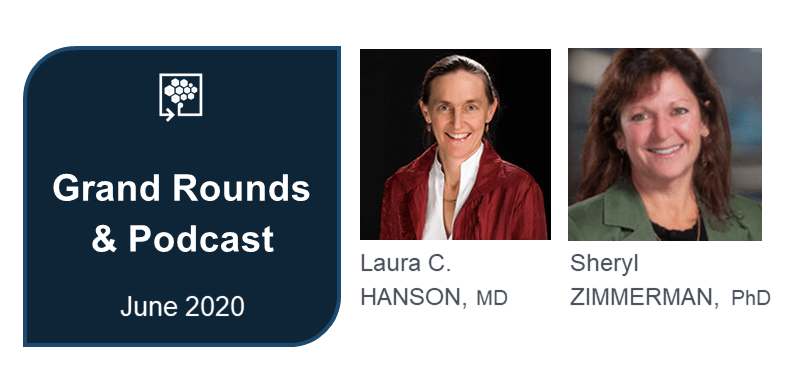
June 2020 – Grand Rounds 7, members of IMPACT's Patient Caregiver Relevant Outcomes Core describe person and caregiver-centered outcome measurement in AD/ADRD ePCTs, give an overview of how outcomes are mapped to care domains, and highlight the methodological challenges present in AD/ADRD and pragmatic research.
Laura C. Hanson, MD, MPH
Core Leader, Patient/Caregiver Relevant Outcomes Core
Member, Steering Committee
Professor, Division of Geriatric Medicine
Director, UNC Palliative Care Program
University of North Carolina School of Medicine
Sheryl Zimmerman, PhD
Executive Committee, Patient/Caregiver Relevant Outcomes (PCRO) Core
University Distinguished Professor and Co-Director, Program on Aging, Disability, and Long-Term Care, Cecil G. Sheps Center for Health Services Research
University of North Carolina at Chapel Hill