

Metascience Solutions for the Paradox of Evidence-Based Decision Making
April 1, 2021
 Stuart Nicholls, PhD, from the Clinical Epidemiology Program at the Ottawa Hospital Research Institute, continues the discussion from his February 18 Grand Rounds presentation. This discussion with IMPACT Principal Investigator Susan Mitchell, MD, MPH answers questions from Dr. Nicholls's presentation on giving an overview of ethical issues raised by pragmatic randomized controlled trials (RCTs) and which derive from ongoing work to develop guidance for those designing and conducting pragmatic RCTs.
Want to hear more? View the full Grand Rounds presentation.
For alerts about new episodes, subscribe free on iTunes or SoundCloud.
University of Maryland School of Nursing

University of Maryland School of Nursing
Dr. Carpenter is an assistant professor at the University of Maryland School of Nursing and a health scientist at the Corporal Michael J. Crescenz VA Medical Center. Dr. Carpenter is a geriatric nurse practitioner, an advanced certified hospice and palliative care nurse, and fellow in palliative care nursing. She is an expert in geriatric palliative care, specializing in post-acute and long-term care settings. Her research interests focus on the implementation and evaluation of non-pharmacologic palliative care interventions to improve quality of life, reduce symptom burden, and enhance decision making for people with serious illness and their care partners in post-acute and long-term care. She has extensive experience collaborating with interdisciplinary health professionals in community skilled nursing facilities and Veterans Affairs community living centers to implement evidence-based practices and complex interventions to support high-quality palliative care. Her position as an educator, researcher, and leader supports national efforts to enhance serious illness care for older adults.
RATIONALE: People living with dementia (PLWD) receiving post-acute care in nursing homes (NHs) often receive treatments focused on intense rehabilitation and/or aggressive, disease-focused therapies. This has profound implications for quality of life and end-of-life experiences of PLWD. Palliative care consultation offers an evidence-based alternative for PLWD; it increases advance care planning, improves patient and care partner satisfaction, and reduces costs and acute care use.
OBJECTIVE: This pilot study will assess the implementation outcomes and fidelity of a Nurse Practitioner (NP)-delivered telehealth Palliative Care Consultation in Post-Acute Care (PCC-PAC) intervention. The evidence-based PCC-PAC is a multi-component non-pharmacologic, NP-delivered intervention designed to meet the needs of PLWD receiving post-acute care in NHs.
SETTING: One nursing home located in the northeast United States.
POPULATION: PLWD and their care partners newly admitted to NHs for post-acute care following a recent hospitalization.
DESIGN: Single arm pilot study for an embedded pragmatic clinical trial (ePCT)
OUTCOMES: The acceptability, appropriateness, and NP and NH fidelity to the telehealth delivered PCC-PAC.
IMPACT: Embedding complex interventions in NHs is challenging and requires addressing barriers to adopting new practices as well as effective implementation. Findings from this study will immediately inform refinements of the telehealth PCC-PAC and prepare the team for testing the PCC-PAC in a large-scale effectiveness/implementation cluster, randomized ePCT.
University of Connecticut Health Center

University of Connecticut Health Center
Emory University
Dr. Fortinsky is a professor at the University of Connecticut School of Medicine, where he is a core faculty member at the UConn Center on Aging and holds the Health Net, Inc. endowed chair in geriatrics and gerontology. For more than 30 years, Dr. Fortinsky has collaborated with colleagues from a wide range of scientific disciplines, and with numerous healthcare system and community-based organization partners, to design and carry out studies intended to improve healthcare and optimize health-related outcomes for community-dwelling older adults living with Alzheimer’s disease and AD-related dementia and their families. Presently, he serves as principal investigator for studies funded by the National Institute on Aging (NIA) and the Patient-Centered Outcomes Research Institute designed to test in-home, team-based interventions targeting older adults with cognitive vulnerability due to dementia, depression, and/or a history of delirium.
RATIONALE: Efficacious interventions offering meaningful benefits to family and other informal caregivers of older adults with Alzheimer’s disease and related dementias (ADRD) would be attractive to office-based practitioners if a pragmatic linkage could be made between interventions and these types of health care settings.
OBJECTIVE: We aim to embed a pragmatic caregiver identification and invitation strategy into the daily workflow of two outpatient clinics, enabling caregivers to complete the efficacious online psychoeducational Tele-Savvy program. We also aim to evaluate Tele-Savvy effectiveness, assess implementation of the caregiver identification and invitation strategy, and determine viability of routinely collecting and storing caregiver outcomes data into the clinics’ electronic health record systems.
SETTING: Geriatric and dementia care outpatient clinics in two health care systems.
POPULATION: 100 family and other informal caregivers of older adults living at home with ADRD who are patients in the two outpatient care settings.
DESIGN: At each clinical site, caregivers will be recruited in three sequential cohorts. Within each cohort, caregivers will be randomly assigned to join a Tele-Savvy program or to access an online self-guided program about caregiving during crisis. We also will carry out an implementation evaluation to determine clinical staff acceptability and willingness to adopt Tele-Savvy as a routinely-offered caregiver psychoeducational program.
OUTCOMES: Primary outcome is self-reported caregiver mastery. Secondary outcomes are self-reported caregiver reactions to memory and behavior problems, and self-reported perceived stress. All of these outcomes were used in the Tele-Savvy intervention efficacy trial.
IMPACT: If this pilot study successfully achieves its objectives, we will be poised to design a large embedded pragmatic trial engaging sites from the large pool of geriatric and dementia care clinics nationwide. Our longterm goal is to routinely offer Tele-Savvy to caregivers, and to routinely store caregiver outcome data, in health care systems that provide outpatient care to people living with ADRD and their families.
The National Institute on Aging (NIA) Imbedded Pragmatic Alzheimer’s Disease (AD) and AD-Related Dementias (AD/ADRD) Clinical Trials (IMPACT) Collaboratory is pleased to announce that the IMPACT community has been awarded 4 NIA COVID-19 Supplements for research efforts in response to the urgent public health needs arising from COVID-19 and it’s devastating impact on people living with dementia, their families and care partners.
Effect of a COVID-Specific Advance Care Planning Intervention on Documentation of Advance Directives and Goals of Care
Principal Investigator: Ellen McCreedy, PhD, MPH, Brown University School of Public Health
Dr. McCreedy and her team will conduct a cluster randomized embedded pragmatic clinical trial (ePCT) by leveraging electronic health records of Bluestone Physician Services to test the effectiveness of a COVID-specific, advance care planning (ACP) intervention on documentation of care preferences among assisted living community (ALC) residents with AD/ADRD from 150 ALCs in 3 states.
Evaluation of a State-wide Effort to Improve COVID-19 Infection Control in Massachusetts Nursing Homes
Principal Investigator: Lewis Lipsitz, MD, Marcus Institute for Aging Research, Hebrew SeniorLife
Dr. Lipsitz and his team will evaluate the efficacy of a Massachusetts state-funded strategy to minimize the spread of COVID-19 among older adults and their care providers within Massachusetts NHs using multiple data sources. Efficacy will be measured over the 2-month intervention period among all residents in nursing homes (NHs) across Massachusetts compared to those in Connecticut, Rhode Island, New Hampshire, and Vermont.
COVID-19 Serologic Strategies for Skilled Nursing Facilities (CERO)
Principal Investigator: Joshua Chodosh, MD, MSHS, NYU Langone Health
Dr. Chodosh and his team will design and pilot test an intervention that leverages the COVID-19 antibody and PCR status of residents and staff to inform staff-residents care assignments to minimize COVID-19 transmission rates. The team will conduct the study in two New York City facilities with high minority and AD/ADRD representation and compare intervention units using this strategy with those that do not.
Improved Testing for COVID-19 in Skilled Nursing Facilities: IMPACT-C
Principal Investigators: Sarah Berry, MD, MPH, Marcus Institute for Aging Research, Hebrew Senior Life; Vince Mor, PhD, Brown University School of Public Health
Drs. Berry and Mor were awarded a supplement to improve COVID-19 testing for underserved and vulnerable populations as part of the Rapid Acceleration of Diagnostics (RADx) initiative, the RADx Underserved Populations (RADx-UP) program. This initiative will leverage the foundation of the IMPACT Collaboratory to establish IMPACT-COVID-19 (IMPACT-C), a collaborative dedicated to developing and evaluating SARS-CoV-2 testing strategies in highly vulnerable residents and health care workers of skilled nursing facilities. IMPACT-C will assemble the organizational, administrative, and expertise components necessary to swiftly conduct a rigorous vaccine trial, when available.
Wake Forest School of Medicine
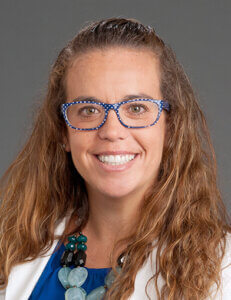
Dr. Gabbard is an assistant professor in the Department of Internal Medicine. She is triple boarded in Internal Medicine, Geriatrics, and Hospice and Palliative Medicine. She trained at the University of Arizona and then completed a clinician-educator fellowship at Johns Hopkins University. Her clinical interests include integration of early palliative care in patients with serious illnesses, clinical care of comorbid chronically ill and frail older adults, and promotion of healthy aging. These interests translate into both educational and research settings. Dr. Gabbard serves as the Palliative Care Research Director and Associate Program Director of the Hospice and Palliative Medicine Fellowship Program at Wake Forest School of Medicine. She is a physician-scholar and educator seeking to develop her strong interests in implementation science, clinical informatics, and pragmatic clinical trial design.
People living with dementia and those with cognitive frailty (i.e., mild cognitive impairment plus frailty) often experience high symptom burden affecting their quality of life and that of their care partners, with many receiving burdensome interventions that may be of limited benefit and that do not promote comfort. Because decision making capacity is often compromised as dementia progresses, it is important to have advance care planning (ACP) discussions early in the disease course to ensure goal concordant care. The Career Development Award will provide Dr. Gabbard with the necessary experience and training in implementation science, clinical informatics, and pragmatic clinical trial design to become an independent clinician-investigator conducting embedded pragmatic clinical trials to improve ACP and other care innovations among people living with dementia or cognitive frailty cared for within health care systems. This training will support the following Specific Aims: (1) To develop a dementia-specific, health care system patient portal-based ACP Tool for patients living with dementia or cognitive frailty and engage end-users in its design, and (2) To pilot test feasibility and preliminary effectiveness of linking the dementia-specific ACP tool to the patient portal to improve ACP engagement and documentation within the electronic health record.
Ana Quiñones, PhD, MS, leader of the IMPACT Health Equity Team and Heather Allore, PhD, leader of the IMPACT Design and Statistics Core were among the authors of a perspective article wherein authors discuss the importance of establishing a link between ADRD and multimorbidity combinations that complicate care and lead to poor outcomes, particularly with regard to racial and ethnic disparities. Several research and policy recommendations are presented to address the intersection of ADRD, multimorbidity and underrepresented populations most at risk for adverse outcomes.
IMPACT Multiple Principal Investigators Susan Mitchell, MD, MPH and Vince Mor, PhD were panelists in the “Workshop on Nursing Home, Hospice, and Palliative Care for Individuals with Later-Stage Dementia: Making Health Systems More Responsive to Dementia.”
The National Institute on Aging (NIA) Imbedded Pragmatic Alzheimer’s Disease (AD) and AD-Related Dementias (AD/ADRD) Clinical Trials (IMPACT) Collaboratory is happy to announce the recipients of its inaugural cycle of the IMPACT Pilot Grant award program. Recipients were selected from an impressive group of competitive applications.
Brent Forester, MD, MSc, Mass General Brigham
Implementation of the Care Ecosystem training model for individuals with dementia in a high risk, integrated care management program
Ula Hwang, MD, MPH, Icahn School of Medicine at Mount Sinai
Pathway to Detection & Differentiation of Delirium & Dementia in the Emergency Department
The IMPACT Collaboratory was established in 2019 to meet the urgent public health need to deliver high quality, evidence-based care to people living with dementia (PLWD) and their care partners within the healthcare systems (HCS) that serve them. The IMPACT Collaboratory accomplishes this mission by building the nation’s capacity to conduct embedded pragmatic clinical trials (ePCTs) among people living with dementia and their care partners through building investigator capacity, funding and supporting the design and conduct of ePCTs, and ensuring the research includes culturally-tailored interventions and people from diverse and under-represented backgrounds.
The IMPACT Collaboratory brings together multidisciplinary experts from across the nation organized into 10 Working Cores Groups and Teams. The cores and teams partner with health care system leaders and key stakeholders to support the IMPACT mission. The IMPACT Collaboratory hosts monthly Grand Rounds and podcasts open to everyone to provide insight into conducting ePCTs for PLWD and their care partners. Learn more on our website, Twitter and LinkedIn.
The IMPACT Collaboratory funds several one-year pilot studies annually, which are meant to generate the preliminary data necessary to design and conduct future full-scale, stage 4 effectiveness ePCTs funded through other grant mechanisms. Awards are for single Principal Investigator applications for one year and are non-renewable. The IMPACT Collaboratory encourages applications that address dementia care for people of all backgrounds and promote health equity.
Award applications for the current awards cycle opened April 28, 2020. The application process is a 2-step competitive process. The first step, a mandatory LOI, is due no later than May 29, 2020. Selected investigators will be invited to submit a full application.
In response to the coronavirus disease (COVID-2019) outbreak, in this award cycle, the IMPACT Collaboratory will prioritize applications proposing pilot ePCTs of telemedicine, telehealth, and remote technologies interventions aimed at improving the health care, unmet needs, quality of life and/or health outcomes for people living with AD/ADRD and their care partners. Applications for pilot ePCTs testing other types of non-pharmacological interventions in this population will also be considered.
Please join our mailing list to receive news and invitations to events and Grand Rounds.