
The 2021-2022 Lived Experience Panel Report: Priorities for Person and Caregiver Relevant Outcomes in Dementia Intervention Research

August 18, 2022

Authors: Antonia V. Bennett, PhD, Laura C. Hanson, MD, MPH, Gary Epstein-Lubow, MD, Sheryl Zimmerman, PhD

Description: Summarizes the discussions with the Lived Experience Panel and members from the Patient and Caregiver Relevant Outcomes Core about research study outcomes that are important to people living with dementia and their care partners.
Read the full report here.

Citation: Bennett AV, Hanson LC, Epstein-Lubow G, Zimmerman SI. The 2021-2022 Lived Experience Panel Report: Priorities for Person and Caregiver Relevant Outcomes in Dementia Intervention Research. NIA IMPACT Collaboratory; 2022. doi: doi.org/10.58234/82222234
Click to view LEP Report | Patient & Caregiver Relevant Outcomes

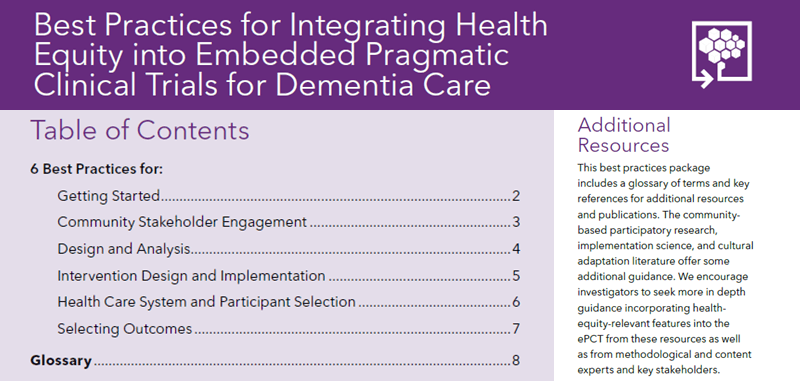
Best Practices for Integrating Health Equity into Embedded Pragmatic Clinical Trials for Dementia

The IMPACT Collaboratory’s leadership and Health Equity Team have worked with experts from across the Collaboratory to create a set of best practices related to integrating health equity into the design and conduct of embedded pragmatic clinical trials for people living with dementia and their care partners.

The guidance document includes a brief introduction, followed by best practices for six specific areas of concern including:

• Getting Started
• Community Partner Engagement
• Design and Analysis
• Intervention Design and Implementation
• Health Care System and Participant Selection
• Selecting Outcomes

Each of the focus areas includes best practices along with brief explanations for why these practices are important, and suggestions for their implementation.

In addition to the six separate focus area sheets, the document includes an extensive glossary of terms and key references for additional resources and key publications.

View the guidance document here.
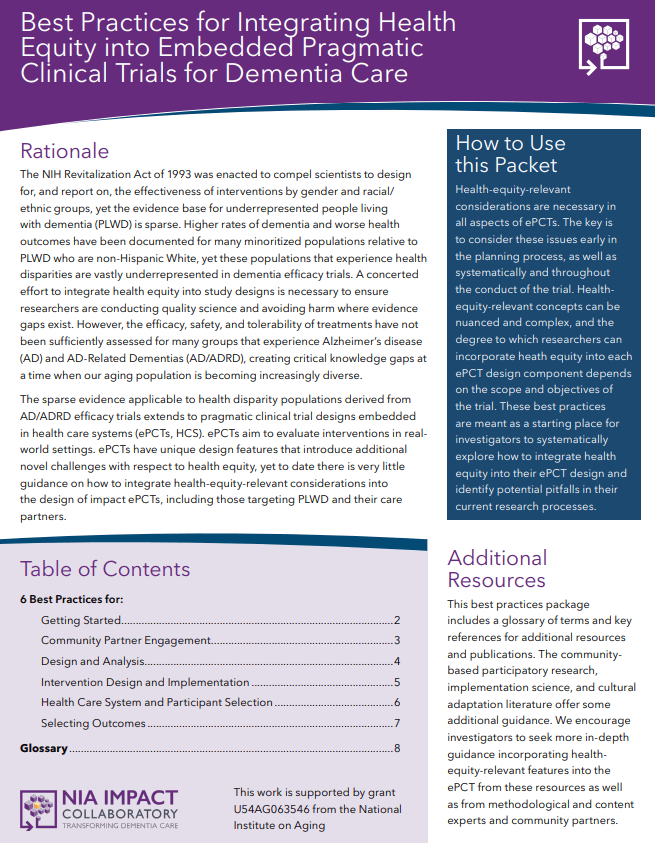
Citation: Best Practices for Integrating Health Equity into Embedded Pragmatic Clinical Trials for Dementia Care. NIA IMPACT Collaboratory; 2022. doi: doi.org/10.58234/74152992
Open Health Equity Best Practices PDF

Healthcare-Generated Data to Identify People Living with Dementia for Embedded Pragmatic Trials

January 2022 – In Grand Rounds 23, Dr. Bynum describes the use of data to identify people living with dementia as well as strengths, challenges and potential equity gaps when using a healthcare-generated data approach in pragmatic clinical trials.

Speaker

Julie Bynum, MD, MPH

Julie Bynum, MD, MPH

Margaret Terpenning Professor of Medicine

University of Michigan

                     Download webinar slides

Learning Objectives

  • Understand the use of data to achieve pragmatic study aims
  • Identify strengths & challenges when use Healthcare-generated data (billing or electronic health record data) for participant identification
  • Identify threats to Health Equity and Generalizability related to choices about data use.


Partnering with People Living with Dementia and Care Partners in Embedded Pragmatic Clinical Trials

December 2021 – Grand Rounds 22 features a panel of participants sharing their experiences in stakeholder engagement in ePCTs for people living with AD/ADRD and their care partners. Perspectives shared include that of a researcher, a stakeholder engagement expert and people living with dementia.

Download Webinar Slides

Speakers

Gary Epstein-Lubow, MD

Gary Epstein-Lubow, MD
Team Leader, IMPACT Engaging Partners Team
Associate Professor of Psychiatry and Human Behavior
Associate Professor of Medical Science, Alpert Medical School of Brown University
Associate Professor of Health Services, Policy and Practice, Brown University School of Public Health


Heidi GilHeidi Gil
Executive Committee Member,
IMPACT Engaging Partners Team

Chief Strategy Officer, LiveWell
Learning Objectives

    • Understand the need/benefits of engaging people living with dementia and care partners in every aspect of dementia care research
    • Identify how all stakeholders can be empowered and engaged as co-partners in research
    • Explore lessons learned and resources available to conduct research differently

Creating Effective Value Propositions: Engaging key stakeholders in embedded pragmatic clinical trials (ePCTs) to evaluate evidence based programs in dementia care

The NIA IMPACT Collaboratory Cores and Teams are creating a series of guidance documents to share important considerations and approaches to planning and conducting embedded pragmatic clinical trials (ePCTs) with people living with dementia (PLWD) and their care partners.

The first of these documents is, “Creating Effective Value Propositions” developed by the Implementation Core.  The guide provides a definition and rationale for using value propositions to communicate value and address potential concerns of key stakeholders related to conducting ePCTs of programs/interventions in dementia care. Six steps for developing value propositions are described, and examples are shared.

The full guidance document can be found here.

Citation: Creating Effective Value Propositions: Engaging key stakeholders in embedded pragmatic clinical trials (ePCTs) to evaluate evidence based programs in dementia care. NIA IMPACT Collaboratory; 2021. doi: doi.org/10.58234/80661959
Click to view Value Proposition